Good memoir examples to read before you write your own each show one decision you can copy. Angela’s Ashes shows the child’s eye, Educated shows how to handle a family that remembers it differently, and Crying in H Mart shows a book that began as one essay. Twelve books, one lesson each.
As an Amazon Associate I earn from qualifying purchases. The books on this page were chosen first; the links were added afterwards.
They are listed by year of first publication, not ranked. Whether you write your own story or commission a parent’s, the decisions are the same.
What makes a memoir worth learning from?
A memoir is worth learning from when you can see the choice the writer made and use it yourself.
A memoir is one part of a life, told by the person who lived it. If you are unsure where memoir ends and autobiography begins, start with autobiography vs memoir vs biography.
All twelve were first published outside India, and two are by writers from the South Asian diaspora. Indian books have their own lists on this blog: the best Indian autobiographies and the best memoirs by Indian women. None of their books is repeated here.
Twelve memoir examples, one by one
Each entry gives a current edition, what the book is, one lesson, and who it suits.
1. Daddyji
Ved Mehta (W. W. Norton paperback, 1989; first published by Farrar, Straus and Giroux, 1972)
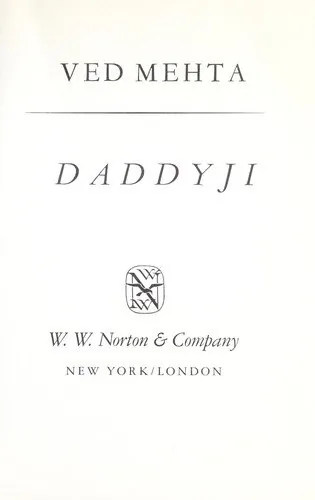
Daddyji · Ved Mehta
Buy on Amazon.inThe first volume of Mehta’s autobiography, Continents of Exile, which ran to 12 instalments between 1972 and 2004. Mehta was born in Lahore in 1934, lost his sight at three, and spent most of his working life in the United States.
What a writer can learn: Your memoir can begin before you were born. Mehta opens his own life story with his father: the book is part autobiography and part biography of his father (Wikipedia). If your story starts with a parent’s choices, you can start there too.
Who it’s for: Punjabi families, and children abroad who want to write a parent’s life and their own in one book.
2. Running in the Family
Michael Ondaatje (Vintage International paperback, 1993; first published by McClelland & Stewart, 1982)
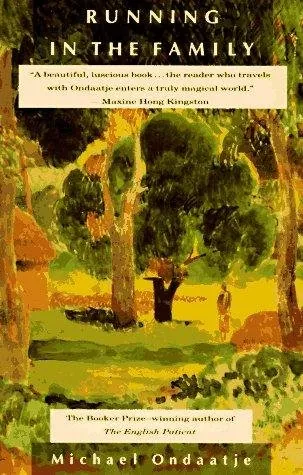
Running in the Family · Michael Ondaatje
Buy on Amazon.inOndaatje’s return to Sri Lanka, the island where he was born, in the late 1970s, and the stories of the family he found there.
What a writer can learn: You can write a portrait instead of a record. Ondaatje said the book is “not a history but a portrait or ‘gesture’”, and Wikipedia calls it a fictionalised memoir. It leans on the sounds, smells and colours of memory. Ondaatje told his readers which kind of book they were holding, and a family book can do the same.
Who it’s for: Sri Lankan and South Asian families abroad, and those going back to the place their parents left.
3. A Man’s Place
Annie Ernaux, translated by Tanya Leslie (Fitzcarraldo Editions, paperback, 2020; first published in French as La Place by Gallimard, 1983)
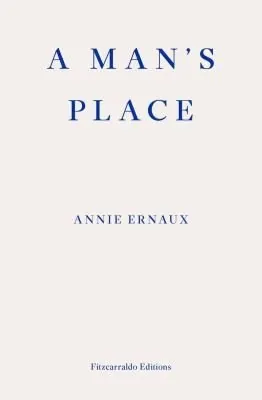
A Man's Place · Annie Ernaux
Buy on Amazon.inErnaux’s short book about her father, who ran a grocery and café and died two months after she passed her exams for a teaching certificate. It won the Prix Renaudot in 1984. Ernaux won the Nobel Prize in Literature in 2022.
What a writer can learn: Plain words can carry a whole life. The term écriture plate, flat writing, is Ernaux’s own, and it first appears in this book. She writes that it comes to her naturally: it is the style of the letters she sent her parents with the essential news. She sets out not to make a life ruled by necessity sound thrilling or moving. If your father spoke plainly, write him plainly.
Who it’s for: children of parents whose lives were mostly work, and people who think they can’t write because they don’t write beautifully.
4. This Boy’s Life
Tobias Wolff (Picador paperback, 1990; first published by Atlantic Monthly Press, 1989)
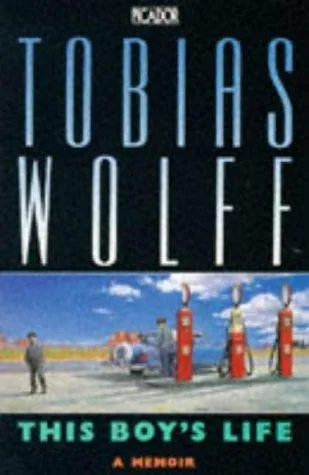
This Boy's Life · Tobias Wolff
Buy on Amazon.inWolff’s boyhood and adolescence in the American Northwest in the 1950s, living with his mother after his parents divorced.
What a writer can learn: Two children of the same parents can remember two different families. Wolff’s book is about life with his mother. His brother, Geoffrey, wrote his own memoir about life with their father. NPR’s Fresh Air described This Boy’s Life as a counterpoint to his brother’s book (Fresh Air). If a brother or sister grew up somewhere else, interview them before you write.
Who it’s for: brothers and sisters, and families split by divorce or by migration.
5. And When Did You Last See Your Father?
Blake Morrison (Granta Books paperback, 1998; first published by Granta, 1993)
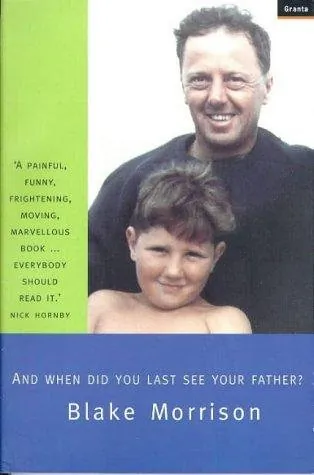
And When Did You Last See Your Father? · Blake Morrison
Buy on Amazon.inMorrison’s account of the illness and death of his father, Arthur, a retired doctor in a Yorkshire village. It won the J.R. Ackerley Prize for Autobiography.
What a writer can learn: A parent’s last months can carry a whole childhood. The book moves back and forth between a few months in the early 1990s and his boyhood and teens in the late 1950s and 1960s. Time Out praised it for favouring accurate recollection over long reflection (Time Out). I wrote about this kind of two-strand book in how to structure an autobiography.
Who it’s for: sons and daughters writing after a father’s death, or during his last illness.
6. The Liars’ Club
Mary Karr (Penguin paperback, 2005; first published by Viking, 1995)
The Liars' Club · Mary Karr
Buy on Amazon.inKarr’s childhood in an oil-refinery town in Southeast Texas in the early 1960s. It won the PEN/Martha Albrand Award and is often credited with starting the revival of the memoir.
What a writer can learn: Two things. The title comes from her father and his friends, who gathered when they were not at work to drink and tell stories, so the book starts from how they talked. And the three parts are each named for a place and a year: “Texas, 1961”, “Colorado, 1963” and “Texas Again, 1980”. In the last part she comes home as an adult after her father’s stroke and learns more about her mother’s past. The grown child who comes back is part of the story.
Who it’s for: families who told stories at the table, and writers stuck on part titles.
7. Angela’s Ashes
Frank McCourt (HarperCollins UK paperback, 1997; first published by Scribner, 1996)
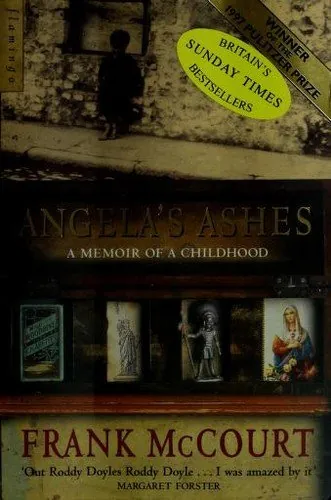
Angela's Ashes · Frank McCourt
Buy on Amazon.inMcCourt’s childhood, first in Brooklyn and then, for most of the book, in poverty in Limerick, Ireland. It won the 1997 Pulitzer Prize for Biography or Autobiography.
What a writer can learn: Tell it from the child’s height, in the moment. Apart from a very short introduction, the book is told in the first person and the present tense (LitCharts). The reviewer Gayle Sims said it was written from a child’s unjudging perspective. It was also his first book, published when he was 66.
Who it’s for: writers of a hard childhood who don’t want to accuse, and people who think 66 is too late to start.
8. The Year of Magical Thinking
Joan Didion (HarperPerennial paperback, 2006; first published by Knopf, 2005)
The Year of Magical Thinking · Joan Didion
Buy on Amazon.inThe year after the death of Didion’s husband, John Gregory Dunne, in 2003, while their daughter was seriously ill. It won the 2005 National Book Award for Nonfiction.
What a writer can learn: Keep notes now. Didion wrote the book between 4 October and 31 December 2004, finishing it a year and a day after Dunne died. Notes she made during her daughter’s stays in hospital went into it. She wrote about her own grief the way a reporter would, with few lines of open emotion. If a parent is ill today, the notes you keep in a hospital corridor are material.
Who it’s for: people writing about a loss, and families caring for an ill parent now.
9. The Glass Castle
Jeannette Walls (Little, Brown UK paperback, 2006; first published by Scribner, 2005)
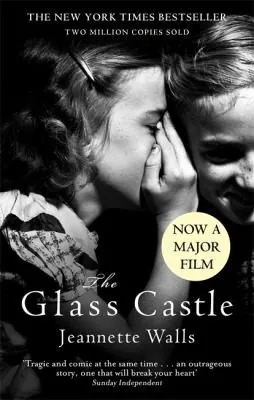
The Glass Castle · Jeannette Walls
Buy on Amazon.inWalls’s childhood moving across the American West and then to West Virginia with her parents and siblings, and her later life as a journalist in New York. The title is the house her father kept promising to build.
What a writer can learn: Open with the scene that made you write. The first part, “A Woman on the Street”, is a conversation with her mother, then living in an abandoned building in New York. That conversation pushed her to tell the truth. Only then does she go back to her first memory, at three. Reviewers also praised how balanced the book is about the good and the bad in her childhood.
Who it’s for: sons and daughters who want to write a parent whole, the good and the hard together.
10. The Tender Bar
J. R. Moehringer (Hyperion, 2005)
The Tender Bar · J. R. Moehringer
Buy on Amazon.inMoehringer’s childhood and early twenties on Long Island, raised by a single mother, with a local bar, Publicans, as his refuge.
What a writer can learn: Read a writer’s own book before you hire them for yours. Andre Agassi read The Tender Bar and asked Moehringer to work with him on his memoir, which became Open in 2009 (Wikipedia). One writer, two books: one in his own voice, one in Agassi’s. I covered how Open was made in who really writes famous autobiographies.
Who it’s for: people deciding whether to write it alone or with a ghostwriter.
11. Educated
Tara Westover (Windmill Books paperback; first published by Random House, 2018)
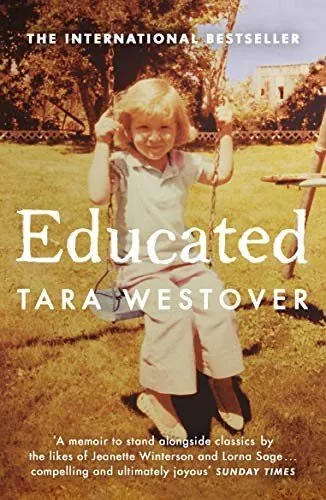
Educated · Tara Westover
Buy on Amazon.inWestover’s childhood in the mountains of Idaho, where she had no formal schooling, and her path to a PhD at Cambridge.
What a writer can learn: When the family remembers it differently, say so on the page. A footnote at the end of chapter 7 sets out three versions of the day her brother Luke was burned: Luke’s, her brother Richard’s and her own. She records what everyone agrees on, and adds “Still, perhaps our memories are in error” (LitCharts). She also gives her parents other names in the book.
Who it’s for: families where brothers and sisters disagree, which is most families.
12. Crying in H Mart
Michelle Zauner (Knopf, 2021)
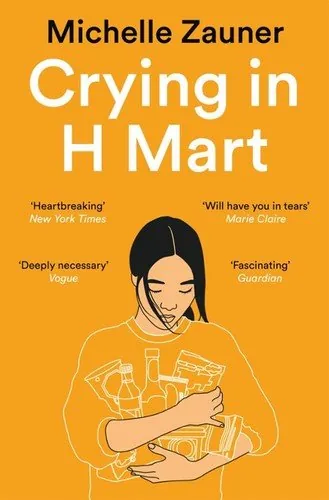
Crying in H Mart · Michelle Zauner
Buy on Amazon.inZauner, who records as Japanese Breakfast, on her Korean mother, Chongmi, who died of cancer in 2014, and on learning to cook the food she grew up with.
What a writer can learn: Start with one story. The book grew out of an essay of the same name in The New Yorker in August 2018. Literary agents contacted her after it ran, and the book opens with that essay. You do not need a book plan to begin. Write one story, and see whether it wants to be more.
Who it’s for: sons and daughters of immigrant mothers, and writers who can’t face a whole book yet.
Free printable: Before the handover
39 questions to record with a founder, in eight sessions, so the next generation inherits why the rules exist. Leave your email and download it straight away.
Memoir examples at a glance
This table sets out each memoir example, its year of first publication and the one lesson it teaches.
| Book | Author | First published | What to learn |
|---|---|---|---|
| Daddyji | Ved Mehta | 1972 | Begin with the parent who came before you |
| Running in the Family | Michael Ondaatje | 1982 | Write a portrait, and say so |
| A Man’s Place | Annie Ernaux | 1983 (English 1992) | Plain words for a plain life |
| This Boy’s Life | Tobias Wolff | 1989 | A sibling may remember a different family |
| And When Did You Last See Your Father? | Blake Morrison | 1993 | Let a parent’s last months carry the childhood |
| The Liars’ Club | Mary Karr | 1995 | A place and a year make a part |
| Angela’s Ashes | Frank McCourt | 1996 | The child’s eye, in the present tense |
| The Year of Magical Thinking | Joan Didion | 2005 | Keep notes while it happens |
| The Glass Castle | Jeannette Walls | 2005 | Open with the scene that made you write |
| The Tender Bar | J. R. Moehringer | 2005 | Read a writer’s own book before you hire them |
| Educated | Tara Westover | 2018 | Footnote where the family disagrees |
| Crying in H Mart | Michelle Zauner | 2021 | Start with one story |
Also mentioned
Andre Agassi’s Open, which J. R. Moehringer wrote with him, comes up under The Tender Bar.
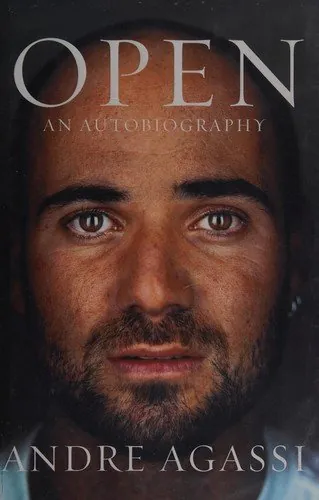
Open: An Autobiography · Andre Agassi
Buy on Amazon.inHow I chose them
Every book here is a memoir: a first-person account of one part of a life by the person who lived it. I picked books for the problem they solve and kept to one lesson each.
I checked every title, author, first publisher and year against a publisher’s page, a library record or a reference source. I checked each lesson against a publisher’s description, a named review, a study guide or a reference source such as Wikipedia, and where I could not confirm one, I chose another or left the book out.
Helen Macdonald’s H is for Hawk is missing on purpose: it already appears in how to structure an autobiography.
What these memoirs mean for your own story
Each of these twelve lessons comes down to a decision you will face in your own book, or in a parent’s.
Three of them are about other people’s memories. Wolff’s brother had written his own book about their father, Westover footnoted three versions of one accident, and Karr went home and learned about her mother’s past. On my page for people writing their own life story I put it this way: the book gets better the moment somebody who was there remembers it differently.
Three are about where to begin: with the parent (Mehta), the scene that made you write (Walls), or one story (Zauner). None of these twelve lessons is about what to leave out. For that, read what to leave out of your autobiography.
If you are thinking of a ghostwriter, do what Agassi did and read the writer’s own work first. Then test them on your own voice, with a short sample such as a page in your voice; will it sound like me? explains what to listen for.
A parent’s book can grow the way Zauner’s did, one story at a time: the gift book is a short book of 10 to 12 stories about a mother, a father or both, and a memoir about both parents explains how a two-parent book is shaped.
Questions people ask
These are questions people often ask about memoir examples and reading before writing.
What is a good example of a memoir?
Angela’s Ashes is a classic childhood memoir: one part of a life, told in the first person. The Year of Magical Thinking covers a single year. Both show a memoir choosing one part of a life.
Should I read memoirs before writing my own?
Yes, a few, chosen for the problem you face. If your problem is a family that disagrees, read Educated. If it is a parent’s death, read Morrison, Ernaux or Zauner, and for grief while it is still happening, Didion. Read for the choice the writer made.
What is the difference between a memoir and an autobiography?
An autobiography is your whole life. A memoir is one part of it, or one theme. I set out the differences, with examples, in autobiography vs memoir vs biography.
Can a memoir be about my parent?
Yes. Daddyji, A Man’s Place and Crying in H Mart are each, in large part, about a parent. A memoir can centre on someone you knew well, told from where you stood.
Still deciding whether to write it yourself? Start with should you hire a ghostwriter or write it yourself.
Leave a Reply