The best Indian autobiographies to read before writing your own start with three: Gandhi’s The Story of My Experiments with Truth, Nirad C. Chaudhuri’s The Autobiography of an Unknown Indian, and Naseeruddin Shah’s And Then One Day. Each makes one choice you can copy: a single thread, places before people, and an end point well short of today.
As an Amazon Associate I earn from qualifying purchases. The books on this page were chosen first; the links were added afterwards.
Below are eleven books in all, from 1927 to 2017. For each one I give the edition you can buy in India now, what the book is, the craft choice worth borrowing, and who it suits.
How to read an autobiography as a writer
Read an autobiography as a writer and you stop asking “what happened” and start asking “what did they choose”.
Every life has more material than a book can hold, so every autobiography is a set of decisions. Where to begin, whose voice carries it, who gets a chapter, where to stop. You will face the same ones.
Four of the eleven credit a second person: “with” or “as narrated to”. Nothing odd about that. I wrote about who writes famous autobiographies earlier in this series. If you are unsure what counts as an autobiography and what counts as a memoir, start with autobiography vs memoir vs biography.
Founders and women have their own lists, and none of their books repeat here. See the best biographies of Indian business founders and the best memoirs by Indian women.
The best Indian autobiographies, one by one
1. An Autobiography or The Story of My Experiments with Truth
M.K. Gandhi, translated from Gujarati by Mahadev Desai (Navajivan, current Ahmedabad paperback; first published in two volumes, 1927 and 1929)
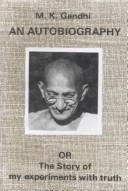
An Autobiography or The Story of My Experiments with Truth · M.K. Gandhi
Buy on Amazon.inGandhi’s account of his life from childhood through South Africa to the early 1920s, written in Gujarati.
What a writer can learn: It was written in pieces. Gandhi published it weekly in his journal Navajivan, in 166 instalments, from November 1925 to February 1929. So most chapters are short and hold one episode each. In the preface he names the thread that ties them: “I simply want to tell the story of my experiments with truth.” One thread, stated early, lets a book of short pieces read as one life.
Who it’s for: anyone who wants to write in short sittings, a chapter at a time.
2. The Autobiography of an Unknown Indian
Nirad C. Chaudhuri (Jaico, Indian paperback; first published by Macmillan, 1951)
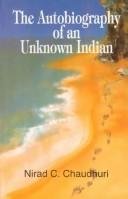
The Autobiography of an Unknown Indian · Nirad C. Chaudhuri
Buy on Amazon.inChaudhuri’s life from his birth in 1897 in Kishoreganj, now in Bangladesh, to his years in Calcutta, written when he was about fifty.
What a writer can learn: He gives the places before he gives himself. The book is in four books, each with a preface and four chapters. Book One is called “Early Environment”, and its chapters are “My Birth Place”, “My Ancestral Place”, “My Mother’s Place” and “England”. Most of us start with “I was born”. Chaudhuri starts with the world that made him, and lets the reader meet the person inside it.
Who it’s for: readers with patience for a long book, and anyone whose family story is rooted in a town that no longer looks the way it did.
3. My Days
R.K. Narayan (Indian Thought Publications, birth centenary edition, 2006; first published 1974)
My Days · R.K. Narayan
Buy on Amazon.inNarayan’s autobiography, in three sections: boyhood, the years as a young writer, and later life.
What a writer can learn: One voice holds the comedy and the grief. The first section is a boy in his grandmother’s house in Madras, with a monkey, a peacock and a parrot for company. The second section holds his marriage to Rajam, the birth of their daughter, and Rajam’s early death, which left him devastated. The book’s description calls the style simple and lucid, and it stays that way through both. You do not need a grander voice for the hard chapter.
Who it’s for: readers who want a short book, and anyone who has to write one chapter about a loss.
4. Wings of Fire: An Autobiography
A.P.J. Abdul Kalam with Arun Tiwari (Universities Press, current paperback; first published 1999)
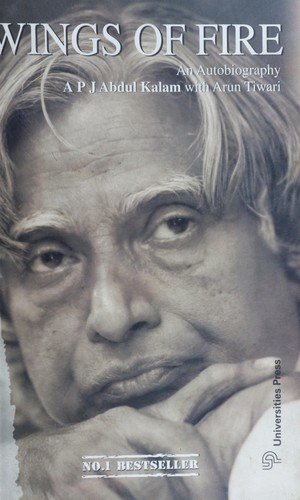
Wings of Fire: An Autobiography · A.P.J. Abdul Kalam with Arun Tiwari
Buy on Amazon.inKalam’s life from a childhood in Rameswaram to India’s missile programme, written with Arun Tiwari, a colleague.
What a writer can learn: It opens with the people who made him. What he made comes later. The first section begins with homage to his parents: his father, a boat owner, and his mother, Ashiamma. Then come the friends and teachers of his school years in Rameswaram. Only after that does a rocket appear. A reader who meets the parents first reads every later chapter as their son’s. (I looked at how this book is divided into named parts in how to structure an autobiography.)
Who it’s for: students, first-time readers of autobiography, and anyone who wants proof that a short book can hold a big career.
5. Climbing the Mango Trees: A Memoir of a Childhood in India
Madhur Jaffrey (Ebury Press, paperback, 2006; first published 2005)
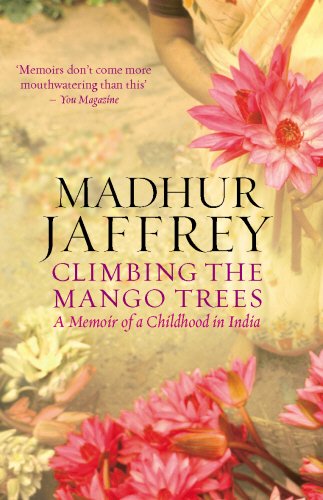
Climbing the Mango Trees: A Memoir of a Childhood in India · Madhur Jaffrey
Buy on Amazon.inJaffrey’s childhood in a joint family in Delhi and Kanpur in the 1930s and 1940s, with Partition at its edge, by the actor and cookery writer who later lived in Britain and America.
What a writer can learn: Two things. The opening line puts you in a room on the first day: “I was born in a sprawling house by the Yamuna River in Delhi.” Within a paragraph her father has overruled the family priest and chosen her name. And food carries the family. Publishers Weekly counted about forty people at dinner under her grandfather, and the book closes with 30 family recipes drawn from those meals. If your family remembers in dishes, write the dishes.
Who it’s for: the diaspora, and anyone who wants to write a childhood. If that is your family’s story, see memoirs for the Indian diaspora.
6. Simply Fly: A Deccan Odyssey
Captain G.R. Gopinath (HarperCollins India, paperback, 2011; first published 2010)
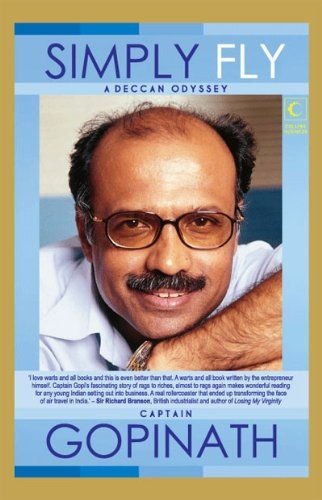
Simply Fly: A Deccan Odyssey · Captain G.R. Gopinath
Buy on Amazon.inFrom army officer to silk farmer to the founder of the airline Air Deccan.
What a writer can learn: It tells a founder’s life as a string of ventures, including the silk farm that won a Rolex award. It keeps the ones that didn’t work. When Foreign Policy wrote about it in 2010, it had sold 30,000 copies in hardback and the Indian Express had praised what it teaches about persevering through repeated failure. The failures are the reason readers trust the success. A founder story that leaves them out reads like a brochure.
Who it’s for: founders, and anyone whose career changed direction more than once.
7. The Race of My Life: An Autobiography
Milkha Singh with Sonia Sanwalka (Rupa, 2013)
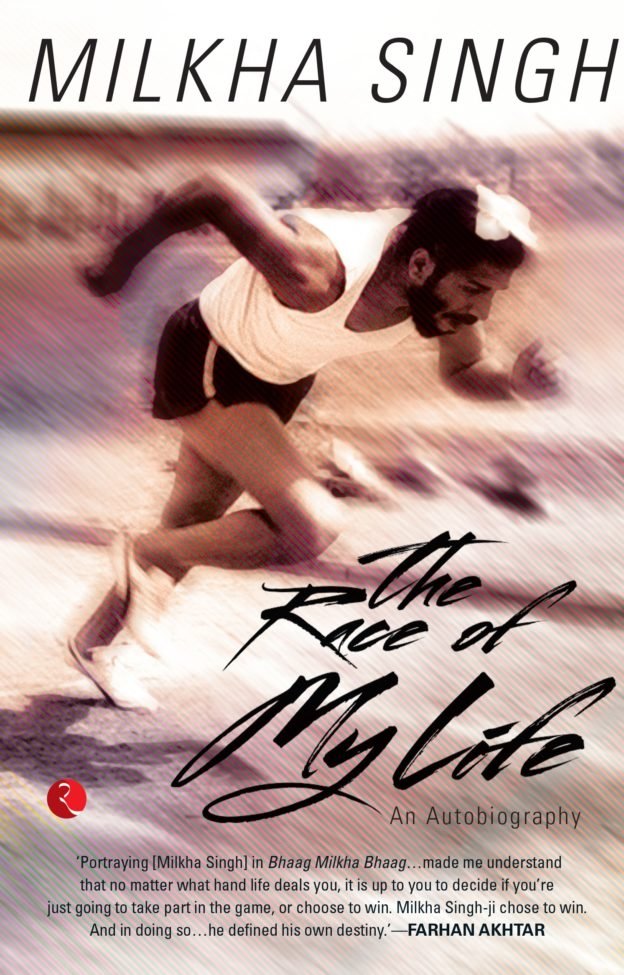
The Race of My Life: An Autobiography · Milkha Singh with Sonia Sanwalka
Buy on Amazon.inThe athlete’s life from surviving Partition to the army, the Commonwealth Games gold and the Olympics, in 184 pages.
What a writer can learn: One plain image explains a turning point: he ran his first army race for a daily glass of milk. That glass does the work a page about ambition could not. Look for the glass of milk in your own story.
Who it’s for: sport readers, Punjabi families, and anyone writing a parent’s book with a son or daughter doing the interviews.
8. Playing It My Way: My Autobiography
Sachin Tendulkar with Boria Majumdar (Hodder & Stoughton, paperback, 2015; first published 2014, by Hachette India in the subcontinent)
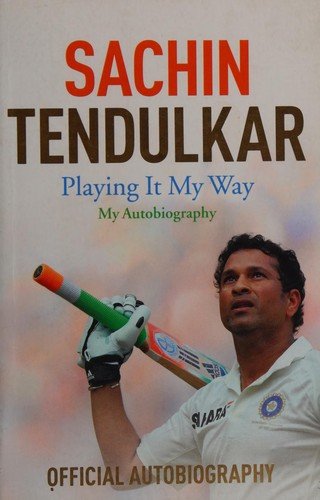
Playing It My Way: My Autobiography · Sachin Tendulkar with Boria Majumdar
Buy on Amazon.inFrom a Mumbai schoolboy to a Test debut at 16, 24 years of international cricket, and his last day as a player in 2013.
What a writer can learn: When every match is already on record, the book’s value is what only the subject knows. The publisher sums it up as the pressure, the injuries, the early World Cup exits and the criticism of his captaincy, with a glimpse of his private life and family. It became the most pre-ordered biographical book in India, ahead of the Steve Jobs biography.
Who it’s for: cricket readers, and anyone whose working life was lived in public.
9. Dilip Kumar: The Substance and the Shadow
Dilip Kumar, as narrated to Udayatara Nayar (Hay House India, 2014)
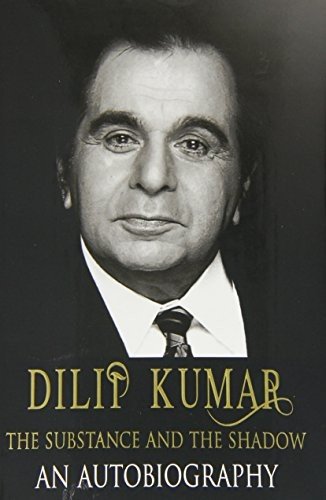
Dilip Kumar: The Substance and the Shadow · Dilip Kumar, as narrated to Udayatara Nayar
Buy on Amazon.inThe actor’s life, from a childhood in Peshawar through six decades in Hindi cinema, told to the film journalist Udayatara Nayar.
What a writer can learn: Three choices. It began, in 2004, when he found a published account of his life that he thought was wrong, so the book sets the record straight in his own words. The title carries the book’s idea: the substance is his life as Yousuf Khan, the shadow is the screen name that grew larger than him. And after his own 25 chapters, a second part gathers recollections from 43 people who worked with him or knew him. Other voices, bound in at the back.
Who it’s for: film readers, and anyone who wants the family’s and colleagues’ memories inside the same book.
10. And Then One Day: A Memoir
Naseeruddin Shah (India Penguin, paperback, 2015; first published by Hamish Hamilton, 2014)
And Then One Day: A Memoir · Naseeruddin Shah
Buy on Amazon.inHis early years, from a village near Meerut and Catholic schools in Nainital and Ajmer to the National School of Drama, the Film and Television Institute and his first films.
What a writer can learn: He asks the reader’s question himself, wondering whether this is a story worth telling. Then he chooses where to stop. The book ends with the founding of his theatre group, Motley, and his marriage to Ratna Pathak, decades before the year he wrote it. Along the way it gives his first marriage an unsparing account and closes the distance with his father. You do not have to write your whole life. Pick the part with a shape.
Who it’s for: theatre and film readers, and anyone who doubts their story deserves a book. Two minutes on whether your story is worth telling will settle that faster.
11. Lone Fox Dancing: My Autobiography
Ruskin Bond (Speaking Tiger, paperback; first published 2017)
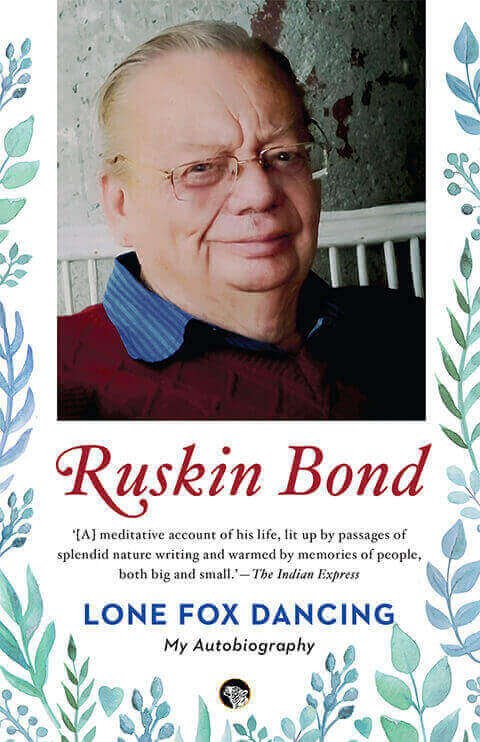
Lone Fox Dancing: My Autobiography · Ruskin Bond
Buy on Amazon.inBond’s life from a childhood with his father in Delhi, through boarding school at Partition and years in England, to his return to India.
What a writer can learn: He tells his father’s death from a child’s height. The early chapters keep the boy’s belief, “I believed that Daddy and I would always be together”, so the loss lands the way it did then. No adult summary. And he wrote it at 83, which he says himself in the epilogue: “The lone fox still dances occasionally, but at eighty-three he is not as agile as he used to be.” Age gave him the distance and kept the child.
Who it’s for: readers of every age, and anyone writing about a parent they lost young.
Free printable: Before the handover
39 questions to record with a founder, in eight sessions, so the next generation inherits why the rules exist. Leave your email and download it straight away.
Famous Indian autobiographies at a glance
| Book | Author | First published | What to learn |
|---|---|---|---|
| The Story of My Experiments with Truth | M.K. Gandhi (tr. Mahadev Desai) | 1927 and 1929 | One thread ties short chapters into one life |
| The Autobiography of an Unknown Indian | Nirad C. Chaudhuri | 1951 | Give the places before the person |
| My Days | R.K. Narayan | 1974 | One plain voice for comedy and grief |
| Wings of Fire | A.P.J. Abdul Kalam with Arun Tiwari | 1999 | Open with the people who made you |
| Climbing the Mango Trees | Madhur Jaffrey | 2005 | Let food carry the family |
| Simply Fly | G.R. Gopinath | 2010 | Keep the failures in |
| The Race of My Life | Milkha Singh with Sonia Sanwalka | 2013 | One concrete image for a turning point |
| Playing It My Way | Sachin Tendulkar with Boria Majumdar | 2014 | Write what the public record can’t hold |
| The Substance and the Shadow | Dilip Kumar, narrated to Udayatara Nayar | 2014 | Bind other people’s memories in |
| And Then One Day | Naseeruddin Shah | 2014 | Choose an end point short of today |
| Lone Fox Dancing | Ruskin Bond | 2017 | Tell a loss at the age you lived it |
How I chose them
Every book here is a first-person account by the person whose life it is. Two call themselves memoirs (Jaffrey and Shah) and I kept them because they are first-person accounts of a life, told by the subject. Four credit a co-writer or a “narrated to” writer, and I named each one.
I checked every title, author, publisher and year against the publisher’s own page, a library record or a named review, and picked the edition you can buy in India today. The craft notes come from publishers’ descriptions and named reviews.
I wanted a spread of fields and decades, from 1927 to 2017, and left founders’ and women’s books to their own lists. One book I wanted, Harivansh Rai Bachchan’s In the Afternoon of Time, I left out because I could not confirm the Indian edition on sale now.
Writing your own autobiography after reading these
Eleven autobiographies show that a life becomes readable through choices. Making them is the hard part of writing your own.
Dilip Kumar’s book ends with 43 other people’s memories of him.
On my page for people who want their own life story written, I ask for six people who will contradict you. A memoir written only from the inside is a defence. These books agree.
Before you start, two earlier posts in this series help: how long an autobiography should be and how to structure an autobiography. And if your worry is that a writer would lose your voice, read will it sound like me.
Questions people ask
What is the most famous Indian autobiography?
Gandhi’s An Autobiography or The Story of My Experiments with Truth is the best known. He wrote it in Gujarati, it ran weekly in his journal Navajivan from 1925 to 1929, and Mahadev Desai’s English translation is still printed by Navajivan in Ahmedabad.
Which Indian autobiography should I read first?
Start with a short one. The first edition of Kalam’s Wings of Fire ran to 180 pages and Milkha Singh’s The Race of My Life to 184. If you want something longer and more literary, read Narayan’s My Days next.
Are famous Indian autobiographies ghostwritten?
Many are written with help, and the good ones say so. I go through how each one is credited in who really writes famous autobiographies.
Which autobiography books by Indians are good for students?
Wings of Fire is the usual first choice, because it is short and opens with family and school. My Days works well for readers who know Narayan’s Malgudi stories.
If the book you want to read next is your own, see how I write an autobiography with you.
Leave a Reply