
What to leave out of your autobiography: other people’s secrets, family money fights you cannot resolve in print, scores you want to settle, details that identify people who never agreed to be in it, and the stretches a reader skips. The test for each is the same. Does it cost someone else more than it gives your story?
As an Amazon Associate I earn from qualifying purchases. The books on this page were chosen first; the links were added afterwards.
Each one below gets a question to ask yourself and what to do instead. Then a checklist, a note on private editions and one short paragraph on the law. This is a guide to craft and family, not legal advice. If you are still deciding what kind of book you are writing, start with autobiography vs memoir vs biography.
How do you write about living family members?
Write every page about a living relative as if that person will read it, because they will.
Siblings grew up in the same house and remember a different one. In-laws married into your family, not into your book. An ex-partner has a version of the marriage that is as true to them as yours is to you. Your children will read what you thought of them at nine and at nineteen, and they will keep reading it for the rest of their lives.
The question to ask: would I hand this page to them myself?
If the answer is no, you have three choices.
- Write your side only: what you saw, what you felt, what it cost you. Leave their motives out, because you cannot know them.
- Cut the page.
- Show it to them before it is printed. Mary Karr, who wrote The Art of Memoir, told NPR’s Fresh Air in 2015 that she has always sent her manuscripts to the people she writes about, because she mistrusts her own memory. Across three books, she said, only one minor anecdote was ever changed (NPR, 2015).
The timing matters as much as the decision. As I wrote on the page about writing a father’s life story, what stays out is decided before publication, not discovered after.
Should family money, property and inheritance go in?
Family money goes in when it shaped your life. A fight over it that is still going on stays out.
The house your father built, the loan that kept the shop open, the year there was no money for fees: these are your story. The division of the property between four brothers, the will someone contests, the case still listed in court: these belong to several people, and some of them have lawyers.
The question to ask: is this still being argued, in the family or in a court?
If it is, write that the split happened and what it did to you. Leave out the figures, the allegations and who said what at the meeting.
On the page about business family history books I put it this way: honest does not mean forensic. What you cannot print yet can still be kept. Record it, keep it out of the manuscript, and store the recordings as a sealed archive for a stated number of years. Many families end up with both a book and an archive.
Free printable: Before the handover
39 questions to record with a founder, in eight sessions, so the next generation inherits why the rules exist. Leave your email and download it straight away.
Whose secrets are yours to tell?
Your own health, mistakes and fears are yours to tell. Other people’s are theirs.
The hard ones arrive sideways. Your mother’s diagnosis is part of your story because you sat in the waiting room. Your brother’s drinking is part of it because you drove him home. Your friend’s divorce is part of it because she slept on your sofa for a month.
In each case, it happened to them first.
Ask yourself: did I learn this as a confidence, and would they tell it themselves?
What to do instead: write what it did to you and leave out the private detail. “My mother was ill for most of 1998” carries the chapter. The name of the illness, the test results and what the doctor said in the corridor usually do not.
If the detail is the point, ask the person. If they say no, it stays out.
Can an autobiography settle a score?
An autobiography can record what someone did to you, but once a page starts arguing the case, readers stop trusting the rest.
Readers can feel a page written to win. The adjectives pile up, the other person never gets a good line, and the author is always right. Karr, in the same interview, gave her own rule: “When there’s a jerk in the book, it’s usually me.”
The test: would this page still be in the book if they had apologised?
If not, it is there to settle the score. Keep the event and cut the verdict. Say what happened, in order, and what it changed for you. Leave out their character, their motives and the line you wish you had said at the time.
What should you cut for pace?
Cut the years that matter to you but do nothing for a reader.
As I wrote on the page about writing your own life story, the two years you find most important are usually the two years a reader skips. Every promotion in order, every posting, every holiday, the full guest list at the wedding: all true, all slow.
Karr told Fresh Air she threw away 1,200 finished pages while writing her memoir Lit. She called them publishable. She cut them because they were not about what mattered to her.
The question to ask: am I a different person at the end of this chapter than at the start?
If not, compress it into a paragraph and move on. Ten years of a steady career can fit on a page. For the shape around it, see how to structure an autobiography, and for the length, how long an autobiography should be.
Can I write about real people in my memoir?
Your life has other people in it, so yes, but each person a reader could recognise needs a decision.
A name is only the start. A job title, a town, a year, an illness and a photograph can identify someone with no name at all, above all to the forty people who knew them.
You have three ways to handle it. Leave the person unnamed (“a colleague at the bank”). Change the details that do not matter to the story, such as the city or the year. Or ask them.
Changing details has limits. Amy Cook, a lawyer writing in Writer’s Digest, calls a new name and a new physical description “a good start”, and says it is not always enough to prevent a lawsuit (Writer’s Digest, 2016).
The question to ask: could someone who knew this person recognise them from this page?
The legal part, briefly
I am a writer, not a lawyer, and nothing here is legal advice. In India, defamation is both a civil wrong and a crime, and a legal read of a non-fiction book is standard practice at most publishing houses (Obhan & Associates, 2019).
The criminal provision is now section 356 of the Bharatiya Nyaya Sanhita. Its first exception protects a true statement only if publishing it is for the public good, and its Explanation 1 can reach words about a person who has died, if they would have harmed that person’s reputation in life and are meant to hurt the family’s feelings (section 356, bare act text). Other countries draw these lines differently.
If your manuscript names living people, pay a lawyer to read it before it is printed. The legal chapter of my guide to self-publishing a biography goes further into India and the UK.
What to leave out of your autobiography: the checklist
Run each chapter through these seven questions before it goes to anyone outside the family.
| Question | Why it matters | What to do |
|---|---|---|
| Would I hand this page to the person in it? | They will read it, and so will everyone who knows them | Write your side only, or show them the page before printing |
| Is this money or property still being argued? | A live dispute has other parties with their own claims | Say the split happened and what it cost you; keep figures and allegations out |
| Is this someone else’s secret? | It happened to them first | Write what it did to you; ask about the detail, or leave it out |
| Would this page survive an apology? | A page written to win makes readers doubt the rest | Keep the event, cut the verdict |
| Am I different at the end of this chapter? | Readers skip what changes nothing | Compress it to a paragraph |
| Could someone recognise a person I have not named? | Job, town and year identify people without a name | Change details that do not matter, or ask them |
| Does the book name living people? | Anyone named can object, and more readers means more people who can | Pay for a legal read before printing |
Is a private edition the answer?
Sometimes the right home for a hard chapter is a book that is never sold.
A private edition is printed for the family and nobody else. Some of the books I write are printed for forty people and never sold. The full book I write starts at ₹10 lakh and typically goes up to ₹20 lakh. It does not include publishing, so whether it becomes forty hardbacks or a book in shops is a decision you make at the end. If the book is about a parent rather than you, the gift book, which starts at ₹5 lakh and typically goes up to ₹10 lakh, is built this way: ten hardback copies to one address, and the parent decides what stays out.
A private edition lowers the stakes. It does not remove them. Your sister still reads it.
From the desk
The line I come back to most is one I wrote on why confidentiality matters when you hire a ghostwriter. What goes in is a craft choice you make together. What stays out is a moral one, and it is yours alone.
So the family questions are settled in the room, before a word is published, and never discovered by a relative after the book is out. When a parent is unsure about a book at all, I promise them the red pen, and anything they want out stays out. On the answers page I put the failure in one line: a memoir that hurts people by accident is a planning failure.
The books in this post
Both books are by Mary Karr, in the paperback editions Indian booksellers list today.
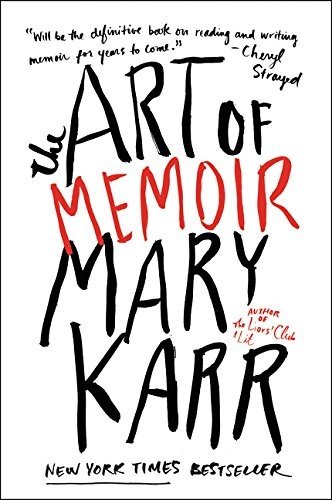
The Art of Memoir · Mary Karr
Buy on Amazon.in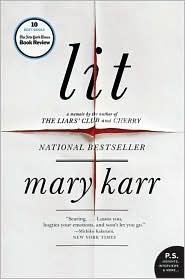
Lit · Mary Karr
Buy on Amazon.inQuestions people ask
What should not be included in an autobiography?
Other people’s secrets, money disputes that are still live, pages written to settle a score, details that identify people who never agreed to be in the book, and long stretches where nothing changes. Most of them can stay in a changed form: your side only, unnamed, compressed, or kept for a private edition.
Can I write about real people in my memoir without their permission?
That depends on what you say about them and how far the book travels, and a lawyer is the person to answer it for your manuscript. The craft answer is simpler. Show people the pages about them before the book is printed.
Do I have to change names in a memoir?
Changing a name is a choice, and on its own it may not hide anyone. Job, town, year and photographs identify people too. Change what does not matter to the story, and leave unnamed anyone who has not agreed.
Should I show my family the manuscript?
Show each person the pages about them before the book is printed. It catches mistakes in your memory, and nobody reads about themselves for the first time in a finished book.
If it is your own story you are writing, read how I write an autobiography with you and what it asks of you.
Leave a Reply