
There are five common ways to structure an autobiography. They are chronological, from birth forward; thematic, one subject per chapter; braided, two timelines side by side; built around one turning point; or a set of stories. Choose by finding the question that runs under your life, then pick the shape that answers it fastest.
As an Amazon Associate I earn from qualifying purchases. The books on this page were chosen first; the links were added afterwards.
If you are working out how to structure an autobiography of your own, below is each shape with a real book that uses it, checked against the book’s own contents page or a named review. Then an eight-step method for turning your life into a one-page chapter plan.
What are the main ways to structure an autobiography?
An autobiography can follow time, subjects, two parallel lines, one decisive event, or a chosen set of days.
| Structure | How it works | Best for | Example book |
|---|---|---|---|
| Chronological | Birth to an end point you choose, often in named stages | A long life with a clear arc; a book for the family | Gandhi, An Autobiography or The Story of My Experiments with Truth; Kalam, Wings of Fire |
| Thematic | Each chapter takes one subject, person or place | A life best told through the people or work in it | Gulzar, Actually… I Met Them |
| Braided | Two strands alternate and comment on each other | A present-day story that only makes sense against an older one | Helen Macdonald, H is for Hawk |
| Turning point | Opens on the decisive event, goes back, then forward | A life that one day split into before and after | Paul Kalanithi, When Breath Becomes Air |
| A set of stories | Ten or twelve self-contained true stories | A first book, a short book, a gift | Sudha Murty, Three Thousand Stitches |
If you are still deciding whether your book is an autobiography or a memoir, the difference between autobiography, memoir and biography is set out in the first post in this series. Structure matters for both.
Five structures, and a real book for each
Every structure here comes from a real book’s contents page or a named review. No writing textbooks.
Chronological
A chronological autobiography runs forward from the beginning, and its one big decision is where to stop.
Gandhi’s autobiography, written in Gujarati and translated by Mahadev Desai, runs in five parts from “Birth and Parentage” to a closing chapter called “Farewell” (contents, Navajivan edition). It stops at 1921. In “Farewell” he explains that his life from then on was so public that people already knew it (text). The end point was a choice, and he said why.
A. P. J. Abdul Kalam’s Wings of Fire, written with Arun Tiwari, shows how to make chronology easier to read. It has four parts, each with a name and a date range: Orientation (1931 to 1963), Creation (1963 to 1980), Propitiation (1981 to 1991) and Contemplation (from 1991) (full text). A reader always knows where they are.
Thematic
A thematic autobiography gives each chapter to one subject, and lets time move inside the chapter.
Gulzar’s Actually… I Met Them has 18 chapters, each given to one person in his life (Open, 2021). The life comes through the people.
The same review says the book grew from newspaper columns: he spoke to Sanchari Mukherjee in several languages, she wrote them in Bengali, and Maharghya Chakraborty translated them into English. A life told aloud in more than one language, then shaped by someone else, is how many autobiographies get made. The third post in this series looks at that.
Braided
A braided autobiography runs two strands side by side, so each one explains the other.
Helen Macdonald’s H is for Hawk follows her training a goshawk after her father’s death, and alongside it the life of T. H. White, whose book The Goshawk told of his own attempt to train one decades earlier. The Skinny’s review describes White’s life running through the book next to hers, with the hawk linking the two (The Skinny, 2014). For a family book, the second strand can be a parent: your move abroad, braided with your father’s move forty years before.
Built around one turning point
A turning-point autobiography opens on the day everything changed, then goes back to show who it happened to.
Paul Kalanithi, a neurosurgeon whose family came from Tamil Nadu and Andhra Pradesh, opens When Breath Becomes Air with a prologue in which he reads his own CT scans. Part I goes back to his childhood in Kingman, Arizona, and his training. Part II returns to the diagnosis and runs forward (LitCharts summary). He died in March 2015 before finishing it, and his wife, Lucy, wrote the epilogue.
A set of stories
A set of stories gives the reader ten or twelve complete days instead of every year.
Sudha Murty’s Three Thousand Stitches is 11 true stories, from her own life and from her work with the Infosys Foundation (The Quint, 2017). It is a memoir in pieces. Each story stands on its own. The gift book I write has the same shape, 10 to 12 stories about a mother, a father or both. As I put it in the twelve-step guide to a parent’s story, twenty hours of tape cannot hold eighty years.
Free printable: Before the handover
39 questions to record with a founder, in eight sessions, so the next generation inherits why the rules exist. Leave your email and download it straight away.
How do you build an autobiography chapter plan?
An autobiography chapter plan is one page: a title and one line for each chapter, decided before any prose is written.
- Name the reader. A book for your grandchildren and a book for strangers need different shapes. The reader decides how much context you explain.
- Choose the end point. Gandhi stopped at 1921. Your book can stop at the sale of the company, the move, or last year.
- Lay out the timeline on one page. Years down the side; places, work and people across. You are not writing yet. You are looking for gaps and clusters.
- List the stories. A story has a day, a place and something at stake: the morning you resigned, the flight out, the first salary in a new currency. Write each one on its own line. Most lives give forty or more.
- Find the question. Ask what one question your life keeps answering. Whether you would go back. Whether the business was worth it.
- Pick the structure. Use the table above. If the question is about one event, try the turning point. If it is about two places or two generations, try braiding.
- Choose the opening scene. Start inside a moment of your own, the signing or the departure gate, not with where your family came from. The background can arrive in chapter two, once the reader cares.
- Write the plan, then test it. Titles that name a day or a thing, not “Early life” or “Career”. Show it to one person who was there before you write a page.
For a sense of how many chapters and words that comes to, see how long an autobiography should be.
What are the common mistakes when structuring an autobiography?
The most common mistake is starting with ancestry and reaching the interesting part in chapter four.
- Chapters named after life stages. “Childhood”, “College” and “Career” tell the reader nothing. Name the day instead.
- Every year gets equal space. A chronological book still chooses. Kalam gave each part its own span, and the spans are not equal.
- Changing shape halfway. A book that starts thematic and turns into a diary in the second half loses the reader.
- Too many strands. Braiding works with two. With four, nobody remembers which is which.
- No end point. A life is still going. The book has to stop somewhere, and the stop should be a choice.
From the desk
A story is one question with a human answer, as I put it in how to write a family legacy book. On write my life story I said it another way: every life that reads well has one question running under it, and you cannot find yours because you already know the answer.
So I start with structure. In my own process, the client approves a chapter plan before I write a word of prose. On what my full book includes, I call that plan the place where a biography is won or lost. The plan is where the question gets found, the shape gets chosen, and the chapters that do not serve it are cut while cutting is still cheap.
Doing it yourself, or having it written
You can build this plan yourself in a weekend, and many people should.
If you write well and have months you will protect, the eight steps above will get you a plan, and whether to hire a ghostwriter or write it yourself has a one-chapter test for deciding. If you have tried and the file is still called untitled, the gap is distance. You know the story too well to see its shape.
Seeing the shape is my job. A full book starts at ₹10 lakh and typically goes up to ₹20 lakh, one book over six months, with the chapter plan approved before any prose and a manuscript of 60,000 to 90,000 words. If the worry is that it will not sound like you, will it sound like me answers that.
The books in this post
These are the six books whose structures are described above, in editions you can buy in India today.
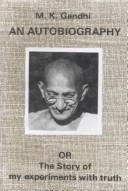
An Autobiography or The Story of My Experiments with Truth · M. K. Gandhi
Buy on Amazon.in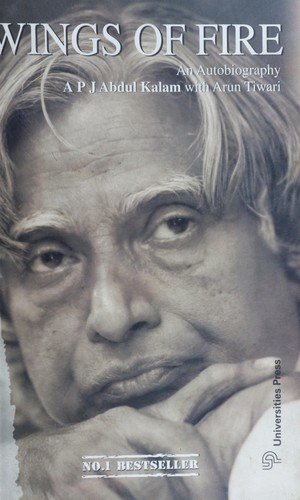
Wings of Fire: An Autobiography · A. P. J. Abdul Kalam with Arun Tiwari
Buy on Amazon.in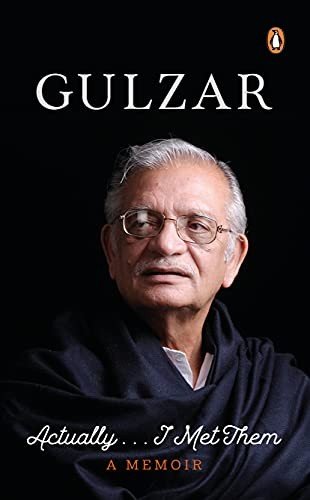
Actually… I Met Them: A Memoir · Gulzar
Buy on Amazon.in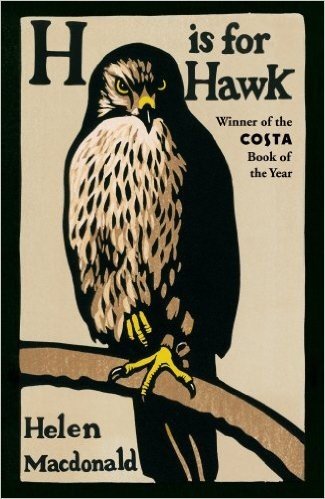
H is for Hawk · Helen Macdonald
Buy on Amazon.in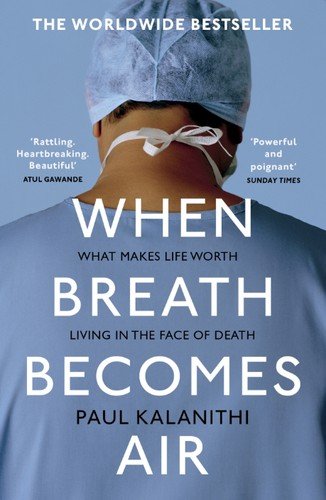
When Breath Becomes Air · Paul Kalanithi
Buy on Amazon.in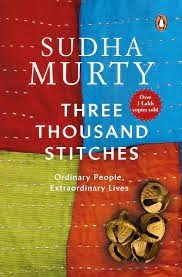
Three Thousand Stitches: Ordinary People, Extraordinary Lives · Sudha Murty
Buy on Amazon.inQuestions people ask
How do I start an autobiography?
Start with a scene, not with your birth. Pick the moment your book’s question first shows up, write that day, and let the background follow in the next chapter.
Should an autobiography be chronological or thematic?
Chronological suits a long life with a clear arc and a family reader. Thematic suits a life best told through its people, places or work, as in Gulzar’s book of 18 portraits. If one event split your life in two, consider the turning-point shape instead.
What is an autobiography outline?
It is the chapter plan: one page with a title and one line for each chapter, in order. It should fit on a single sheet. If it does not, the book has no shape yet.
How many chapters should an autobiography have?
There is no fixed number. Gulzar’s book has 18 chapters; a gift book of stories has 10 to 12. Decide the length first, then the number of chapters follows from it.
Can an autobiography start in the middle of the story?
Yes. Kalanithi’s book opens on his diagnosis, then goes back to his childhood. For a parent’s book, the twelve-step guide calls a two-page prologue from the middle, then a return to the start, the one alternative to birth-to-now worth the trouble.
If you want your own story written and want the structure worked out with you, start with writing your own life story with a ghostwriter.
Leave a Reply