The Ratan Tata biography book is Ratan Tata: A Life by Thomas Mathew, published by HarperCollins India on 25 October 2024. It is an independent biography, written with Tata’s cooperation from interviews and documents, and it shows one thing every family book needs: access is earned over years, long before the first chapter.
As an Amazon Associate I earn from qualifying purchases. The books on this page were chosen first; the links were added afterwards.
This is the first in my teardown series, where I take apart a well-known biography from the writer’s side of the desk.
The Ratan Tata biography book at a glance
Ratan Tata: A Life, Thomas Mathew (HarperCollins India, 2024)
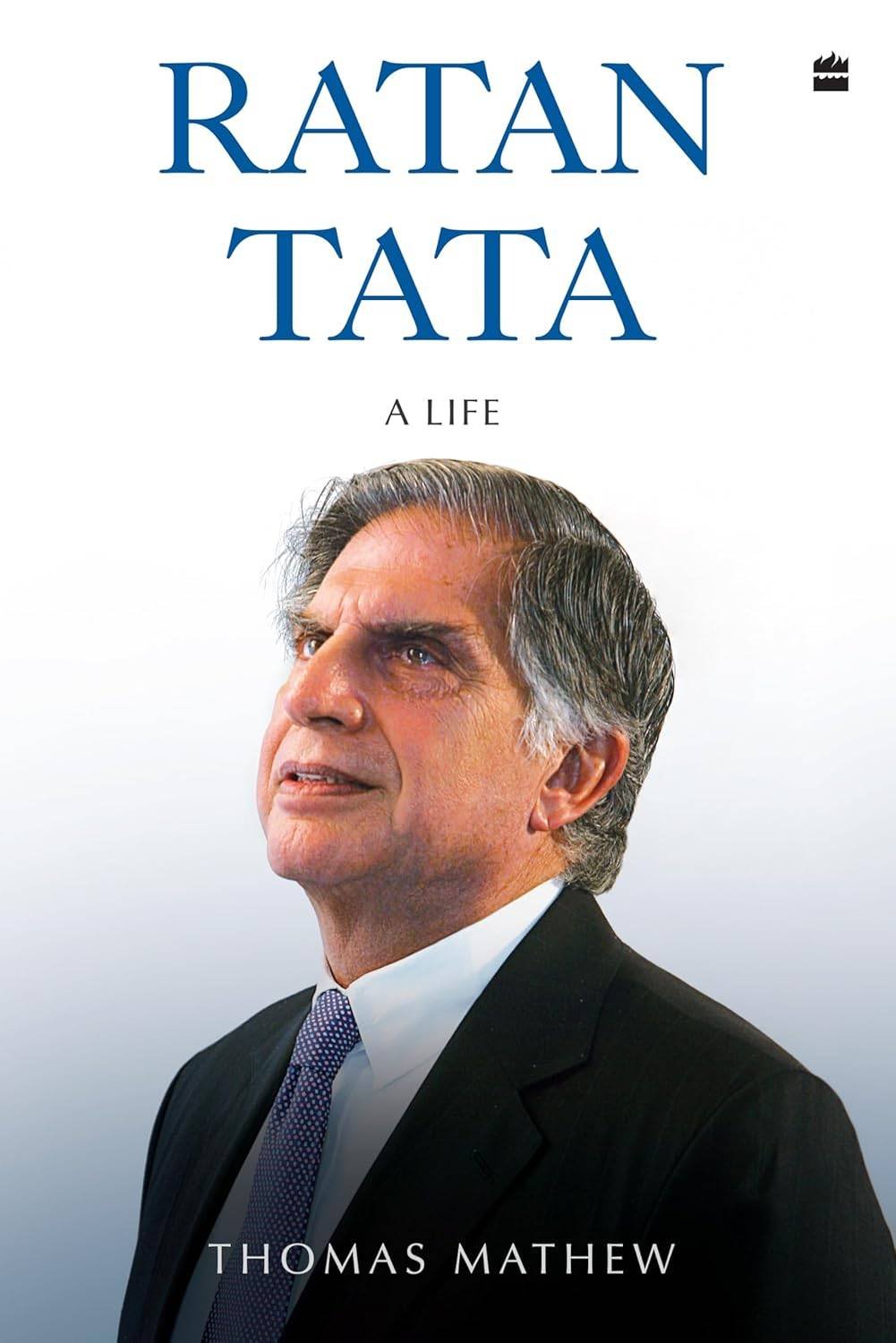
Ratan Tata: A Life, Thomas Mathew (HarperCollins India, 2024) · Thomas Mathew
Buy on Amazon.in| Author | Thomas Mathew, a retired officer of the Indian Administrative Service |
| Subject | Ratan Tata, chairman of Tata Sons from 1991, who died on 9 October 2024 |
| Published | 25 October 2024, HarperCollins India |
| Length | 696 pages plus 32 pages of photographs (hardback); the current paperback is listed at 760 pages |
| Kind | Independent biography, written with the subject’s cooperation |
| Recognition | Business Book of the Year, Biography of a Business Leader, FICCI Publishing Awards 2025 |
How did Thomas Mathew get access to Ratan Tata?
Thomas Mathew got access the slow way: through an acquaintance of about three decades, then interviews with Tata himself and over 130 people around him. HarperCollins says Mathew first met Tata “about three decades ago” and that they stayed in touch through shared interests.
Mathew dates the book’s start to March 2017, when Tata visited Rashtrapati Bhavan as President Pranab Mukherjee’s guest. Mathew worked at Rashtrapati Bhavan then and had written two books about it. “A year later, on a visit to Mumbai, my son and I were invited to his house for dinner,” he told Outlook Business.
What he got was, in his words, “access to documents and hours and hours of interview with him”. In the publisher’s release he describes “a deep dive into a great many personal and corporate documents” and says he “interviewed over 130 people whose lives he had touched”. The rights announcement of 2022 names the range: from Henry Kissinger to a janitor at GT Hospital in Mumbai.
Mathew is clear about the terms. The book, he told Outlook Business, “is not a commissioned work”, and beyond the documents and interviews he received “no financial assistance or any form of support”. His own website still calls him the authorised biographer, and he calls the book independent. Both hold: Tata opened the door, and Mathew kept the pen.
Free printable: Before the handover
39 questions to record with a founder, in eight sessions, so the next generation inherits why the rules exist. Leave your email and download it straight away.
How does the book handle Ratan Tata’s voice?
The book handles Tata’s voice from the outside: it is written in the third person, and Tata speaks through quoted conversation, never as narrator. Study notes on one excerpt, set for school students, call the tone warm and appreciative.
A memoir would have put Tata’s “I” on every page.
A biography in the third person can do what a memoir cannot: show the man through the people around him. Tata’s own phrases surface in the reviews, such as his description of his grandmother, Navajbai Tata, as his “guiding light”, reported by R. Gopalakrishnan, a Tata insider in those years, in his review.
Mathew’s talks since show how much household detail he gathered. At one festival he described a grandmother who would slide apology notes under the boy’s door if she thought she had been unfair. Small things like that carry a life better than any summary of it.
How is the life structured?
Read from the publisher’s summary and the reviews, the life runs in two movements: a chronological opening through family, childhood and education, then the chairman years organised around the companies he shaped. The publisher’s summary runs from “his lonely childhood” to his first major job in the group, to chairman of Tata Sons in 1991, to the head of Tata Trusts.
Open Magazine’s review notes that Mathew “has chapters for each of the major companies and the contribution of Ratan Tata in shaping them” (Open). It answers a hard problem. A conglomerate chairman’s working life runs on many tracks at once. Strict chronology would put him in several companies in every chapter.
The book also starts before its subject. Mathew has said his research traced Tata’s lineage back to Bhikka Tata, generations up the family line. A founder’s story rarely begins with the founder. A biographer who starts with the grandparents gives the reader the inheritance before the heir.
The household detail does structural work too. Gopalakrishnan notes that his grandmother comes early in the book. When the reader reaches the boardroom chapters, the person Tata called his guiding light is already on the page.
What did the book choose to leave out?
The book chooses to be a portrait of values and work, and it leaves the judging to the reader. Mathew calls his subject “the complexities of a simple man”, and has said his main interest was ethical: what set the Tatas apart (The Week).
Gopalakrishnan observes that the book does not spell out how competence and humility combined in Tata. It gives the reader, in his phrase, “enough material to give the reader food for thought”. Read that way, it is restraint: the writer lays out the evidence and stops short of the verdict.
Every biography is mostly a set of decisions about what stays out. A 700-page book about a man who ran a group of that size has left out more than it holds, and the shape of what is left is the writer’s argument.
From the desk
I have written an authorised biography of an Indian industry figure, and the method on my authorised biography page is close to Mathew’s: records going back almost forty years, extensive interviews, and conversations with contemporaries. Before any of it starts, I agree three things with the family: who I can interview, which records I can see, and what is off limits. As I put it on that page, authorised means cooperation, not censorship.
What a family can take from it
A family can take four working lessons from Ratan Tata: A Life for its own founder’s book, and none of them needs a 700-page budget.
- Start the conversations early. Mathew’s access grew out of decades of acquaintance. A family has that access already. What it needs is to sit down with the founder and record it.
- Interview the circle as well as the subject. Over 130 people went into this book. A family book needs fewer, but the driver who was there in 1984 and the first accountant often know what the founder forgot. I wrote about this in how great biographers research a life.
- Let the companies carry the structure. Mathew’s company-by-company chapters solve a problem every business family has: the firm and the family run side by side. My page on the business family history book shows how to interleave the two.
- Begin before the founder. The grandmother, the town, the earlier generation. A founder’s story that starts on the day the company was registered starts too late.
For more books in this vein, see the best biographies of Indian business founders.
Questions people ask
Who wrote the Ratan Tata biography?
Thomas Mathew, a retired IAS officer with three decades in the service, who has also written two books on Rashtrapati Bhavan. Ratan Tata: A Life was published by HarperCollins India on 25 October 2024.
Is Ratan Tata: A Life an authorised biography?
Mathew’s own website calls him the authorised biographer, and he calls the book independent and “not a commissioned work”. It was written with Tata’s cooperation, through interviews and access to documents: Tata opened the door and Mathew wrote the book.
How many pages is Ratan Tata: A Life?
The publisher’s release gives the hardback as 696 pages plus 32 pages of photographs. The current paperback is listed by HarperCollins at 760 pages.
When was the Ratan Tata biography published?
On 25 October 2024, about two weeks after Ratan Tata died on 9 October 2024. A paperback edition followed.
If you want to see what your own founder’s voice looks like on a page before you commit to a book, A Page in Your Voice is one page from a five-minute recording.
Leave a Reply