
Autobiography vs memoir vs biography comes down to two questions: who writes it, and how much of the life it covers. An autobiography is a whole life, told by the person who lived it. A memoir is one part of a life, told by that person. A biography is a life told by someone else.
As an Amazon Associate I earn from qualifying purchases. The books on this page were chosen first; the links were added afterwards.
Below are Indian examples of each, and where “authorised” and “as told to” fit in. Then a table, and which one suits you if it is your own story you want written.
What is an autobiography?
An autobiography is the story of a whole life, written in the first person by the person who lived it, usually in order from childhood.
The best-known Indian example is Gandhi’s An Autobiography or The Story of My Experiments with Truth. He wrote it in Gujarati. Mahadev Desai’s English translation ran in instalments in Young India, and the first book edition came out in two volumes, in 1927 and 1929. Navajivan in Ahmedabad still prints it.
“Whole life” has a limit, though. Gandhi’s autobiography stops in 1921, and he lived until 1948. In the last chapter he says his life since then was “so public that there is hardly anything about it that people do not know” (Farewell, Desai translation). He also did not want to write about Congress colleagues who were still alive.
So an autobiography covers the life up to the day of writing, and only as far as the writer is willing to go.
What is a memoir?
A memoir is one stretch or one theme of a life, told by the person who lived it, and it can skip everything else.
Satyajit Ray’s My Years with Apu is a clean example. It tells the story behind the three Apu films. He left a well-paid job in advertising to make the first one, the money kept running out, and Jean Renoir helped.
Penguin says Ray completed it shortly before his death in 1992 (Penguin India), and it came out in 1994. It stays with three films, and the focus makes it a memoir.
Autobiography and memoir differ in scope. The voice is the same: both are first person. An autobiography tells what happened in a life. A memoir tells what happened in one part of it, and what it meant.
A memoir can follow a theme instead of the calendar, and its writer does not need to be famous. Several books on my list of memoirs by Indian women were written by women who were not public figures when they wrote them.
Free printable: Before the handover
39 questions to record with a founder, in eight sessions, so the next generation inherits why the rules exist. Leave your email and download it straight away.
What is a biography?
A biography is the story of a life told by someone else, built from documents, interviews and the places the person lived.
Ramachandra Guha’s Gandhi Before India takes the same man as the autobiography above and looks at him from outside. It covers the two decades Gandhi spent in South Africa, from 1893, the years Penguin’s description of the book calls “the making of the Mahatma”. Guha went past Gandhi’s own account. He read letters written to and about him, colonial surveillance files and fifty years of newspapers, as I covered in how great biographers research a life.
A biography can do this and an autobiography cannot. It can set the subject’s version beside other people’s, and say where they differ.
What is an authorised biography?
An authorised biography is a biography written with the subject’s cooperation, or the family’s after a death: access to them, to their papers and to the people around them.
Notes of a Dream by Krishna Trilok carries the label on its cover: The Authorized Biography of A.R. Rahman. Penguin describes it as based on interviews between Trilok and Rahman. Rahman launched the book himself in Mumbai in November 2018 (Gulf News).
An unauthorised, or independent, biography needs no one’s permission. The writer works from the record and from whoever agrees to talk.
Authorised does not have to mean flattering. On my authorised biography page I put it in one line. “Authorised means cooperation, not censorship.” In my own practice the subject reviews every section before it is final, and what stays out is theirs to decide.
What does “as told to” mean on an autobiography?
“As told to” on a cover means the person whose life it is did the talking, and a writer turned the talk into the book.
It is still an autobiography: first person, the subject’s voice, the subject’s name first.
Verghese Kurien’s I Too Had a Dream is credited “as told to Gouri Salvi” (Roli Books, 2005); it is on my list of the best biographies of Indian founders. Wings of Fire, A.P.J. Abdul Kalam’s autobiography (Universities Press, 1999), credits Kalam “with Arun Tiwari”. “With” and “as told to” are two cover credits for the same arrangement.
When the writer’s name appears nowhere, the book is a ghostwritten autobiography. It is still the subject’s book. The writer is paid for the work and stays off the cover by agreement.
Autobiography vs memoir vs biography: the differences at a glance
The three types differ on four things: who writes, whose voice, how much of the life, and who decides what goes in.
| Type | Who writes it | Whose voice | How much of the life | Who decides what goes in | Indian example |
|---|---|---|---|---|---|
| Autobiography | The subject | The subject’s, first person | The whole life so far | The subject | Gandhi, The Story of My Experiments with Truth |
| Memoir | The subject | The subject’s, first person | One period or theme | The subject | Satyajit Ray, My Years with Apu |
| “As told to” or ghostwritten autobiography | A writer, from the subject’s telling | The subject’s, first person | The whole life, or one part | The subject | Verghese Kurien with Gouri Salvi, I Too Had a Dream |
| Biography (independent) | Someone else | The biographer’s, third person | The whole life, or one part | The biographer | Ramachandra Guha, Gandhi Before India |
| Authorised biography | Someone else, with the subject’s cooperation | The biographer’s, third person | Usually the whole life | Shared, by agreement | Krishna Trilok, Notes of a Dream |
The books in this post
These are the six books named above, in the editions you can buy in India today.
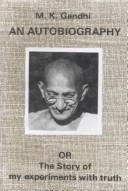
An Autobiography or The Story of My Experiments with Truth · M.K. Gandhi
Buy on Amazon.in
My Years with Apu: A Memoir · Satyajit Ray
Buy on Amazon.in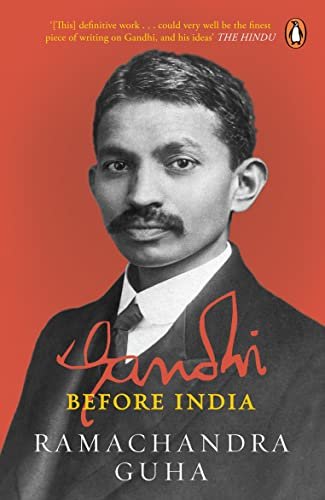
Gandhi Before India · Ramachandra Guha
Buy on Amazon.in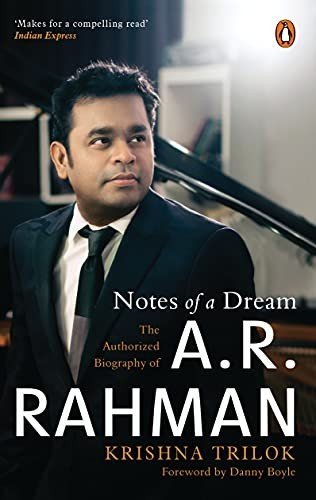
Notes of a Dream: The Authorized Biography of A.R. Rahman · Krishna Trilok
Buy on Amazon.in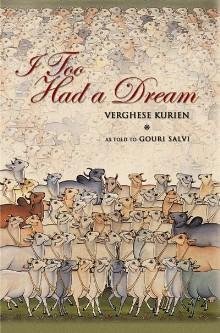
I Too Had a Dream · Verghese Kurien, as told to Gouri Salvi
Buy on Amazon.in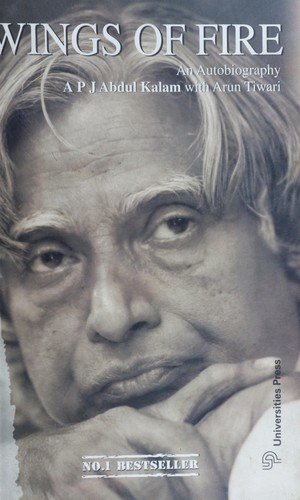
Wings of Fire: An Autobiography · A.P.J. Abdul Kalam with Arun Tiwari
Buy on Amazon.inWhich one fits if you want your own story written?
If it is your own life, you want an autobiography or a memoir, and you can write it yourself or have it written with you.
Five situations, and the book each one points to.
- Your whole life, for your children and theirs, is an autobiography. Start with how I write a life story with the person it belongs to.
- One chapter that changed everything (a move abroad, a business, an illness, a rebuild) is a memoir. Same page, a shorter book.
- If you can tell it but not write it, you want “as told to”, or ghostwritten. Ghostwriter or write it yourself walks through that choice, and will it sound like me? answers the biggest fear about it.
- If you want other people’s views in it, and research beyond your own memory, you want an authorised biography. Someone else writes it, with your access and your agreement.
- If the life is your father’s or your mother’s, it is a biography of a parent. See write my father’s life story, or the gift book for a short book of stories about them.
In every case, decide what stays out before the writing starts. Confidentiality is where that conversation lives.
My fee for a full autobiography, memoir or authorised biography starts at ₹10 lakh and typically goes up to ₹20 lakh, for one book over six months. A short book of stories about a parent is the gift book. It starts at ₹5 lakh and typically goes up to ₹10 lakh, over four months.
From the desk
Picking the type is the easy decision. On my page for people writing their own story I put the harder one this way: “You do not have a writing problem. You have a proximity problem.”
You know every name and every date, and that is why you cannot see the shape. It is the same reason a biographer can see things an autobiography misses. An “as told to” book tries to keep both: your voice, and a second pair of eyes on the shape.
Questions people ask
Is a memoir the same as an autobiography?
No. Both are written in the first person by the person who lived the life, but an autobiography covers the whole life so far. A memoir covers one period or theme.
Satyajit Ray’s My Years with Apu is a memoir because it stays with the making of three films.
Is an autobiography written in the first person?
Yes. An autobiography and a memoir are told as “I”. A biography is told by someone else, usually as “he” or “she”.
Is a ghostwritten autobiography still an autobiography?
Yes. The life, the voice and the name on the cover are the subject’s. Whether the writer is credited (“with”, “as told to”) or not is a choice the subject and the writer agree in the contract.
What is the difference between an authorised and an unauthorised biography?
An authorised biography is written with the subject’s or the family’s cooperation, so the writer gets interviews, papers and introductions. An unauthorised, or independent, biography needs no permission and works from the public record and whoever agrees to talk.
Can I write a memoir about my parents?
A memoir is about your own experience, so a book about your life with a parent can be a memoir. A book about the parent’s own life, in their voice or from their interviews, is a biography or an “as told to” book.
If it is your own story you want on paper, start with write my life story.
Leave a Reply