
Most great biographers research a life in roughly this order: documents first, then the people who knew the subject, then the places, then back to the documents. Robert Caro spells out the first part, and Ramachandra Guha and Hermione Lee show why the rest matters. It takes years, and most of it is reading and listening. The writing comes last.
As an Amazon Associate I earn from qualifying purchases. The books on this page were chosen first; the links were added afterwards.
Below are eight biographers and how they worked, taken from their own essays, interviews and publishers’ accounts. Then five rules they share, which work just as well on a father’s life as on a president’s.
What do great biographers read first?
Great biographers read the printed record first, then go looking for what the printed record left out.
Robert Caro, author of The Years of Lyndon Johnson, describes the order: newspapers, then magazines, then interviews with the people involved, then the papers themselves. At the LBJ Library he reads boxes of about 800 pages each, at roughly a couple of days a box (NPR, 2019). His rule, which he credits to an editor early in his career, is short: turn every page.
Ramachandra Guha faced the opposite problem with Gandhi. The Collected Works run to 100 volumes, but they hold almost none of the letters Gandhi received. So Guha went after letters to and about Gandhi, colonial surveillance files and fifty years of newspapers. His richest source was the Nehru Memorial Museum and Library, home to the Pyarelal collection, which took archivists four years to index (Guha, 2019).
Akshaya Mukul spent about five years on the life of the Hindi writer Agyeya (Khaleej Times), and set the legends against the records. Admirers said Agyeya was meant to drive the car in a plan to free Bhagat Singh. The records name only a “Mr Singh”, who could be Agyeya, so the story had to be weighed before anyone repeated it (The Wire).
Ron Chernow keeps his research on index cards. His life of Ulysses S. Grant took six years and 25,000 index cards, filed in 22 boxes (Philadelphia Inquirer, 2017).
How do biographers interview people?
Biographers interview everyone around the subject, and they expect memories to disagree.
Walter Isaacson met Steve Jobs more than 40 times over two years, often in Jobs’s living room, and did more than 100 interviews with family, colleagues, friends and rivals. He could talk to people straight after they had met Jobs, and he found that five people told five different stories (NPR, 2011).
Hermione Lee, who wrote the lives of Virginia Woolf and Edith Wharton, says witnesses are always unreliable as sources of fact. You listen for how they talk about a person. Facts come second. She also found that people in their 80s and 90s are often the easiest to talk to, and the most frank (British Academy Review).
Caro’s trick is silence. He writes “SU”, for shut up, again and again in his notebooks (NPR, 2019), because people rush to fill a pause, and what they fill it with is often the real answer.
Thomas Mathew, for his authorised life of Ratan Tata, interviewed people from Henry Kissinger to a janitor at a Mumbai hospital (HarperCollins). A life looks different from each place around it. His book is on our list of the best biographies of Indian business founders.
Free printable: 100 questions to ask your parents
Ten sessions, ten questions each, in the order that gets a parent talking. Print it, take it home, tick them off as you go. Leave your email and download it straight away.
Why do biographers go to the places?
Biographers go to the places because a room or a road gives back memories that an interview at a desk does not.
Caro and his wife moved to the Texas Hill Country, where Johnson grew up, for parts of three years. He had at first discounted Johnson’s brother Sam Houston as a witness. Years later he took him into the restored boyhood home after hours and sat him in his old place at the dinner table. Sam then said that some of the best-known stories about Lyndon’s youth had never happened, and other witnesses backed him (Caro’s own essay).
Hermione Lee calls herself a great believer in seeing the places: Nebraska for Willa Cather, County Cork for Elizabeth Bowen, Zlín in the Czech Republic for Tom Stoppard. Guha made four trips to South Africa for Gandhi, and one to Haifa.
Where are the best sources hidden?
The best sources are often private papers, or a keeper who opens a door.
- Thomas Mathew had Ratan Tata’s personal letters and journals, alongside the group’s records.
- Akshaya Mukul worked from Agyeya’s own papers, which a review in The Tribune describes as about 20 trunks (Tribune), as well as archives in Delhi, Chicago and Stanford.
- Ramachandra Guha read Hermann Kallenbach’s papers in Haifa, kept by Kallenbach’s grand-niece, taking notes by hand because there was no photocopier in the house, and found Gandhi’s son Harilal’s jail record, fingerprints included, in an archive in Pretoria.
- Claire Tomalin, writing about Dickens and Nelly Ternan, was helped by the curator at the Dickens House and shown unpublished Dickens letters by one of their editors (theartsdesk).
How biographers research a life: eight at a glance
| Biographer | Book | What they did | The lesson |
|---|---|---|---|
| Robert Caro | The Years of Lyndon Johnson | Read the boxes page by page; lived in the Hill Country; stayed silent in interviews | Turn every page, and let the silence work |
| Walter Isaacson | Steve Jobs (2011) | 40+ sessions with Jobs, 100+ other interviews | Expect five versions of every story |
| Ron Chernow | Grant (2017) | Six years, 25,000 index cards | Keep every fact where you can find it |
| Hermione Lee | Virginia Woolf, Edith Wharton | Treats witnesses as unreliable; visits the places | Listen for how people talk as well as what they say |
| Ramachandra Guha | Gandhi Before India; Gandhi: The Years That Changed the World | Went past the 100 printed volumes to letters, files and newspapers | Find what the official record left out |
| Akshaya Mukul | Writer, Rebel, Soldier, Lover (2022) | About five years; checked each legend against the records | Weigh the legend, don’t repeat it |
| Thomas Mathew | Ratan Tata: A Life (2024) | Letters and journals; interviews from Kissinger to a hospital janitor | Talk to everyone, from the top down and the bottom up |
| Claire Tomalin | The Invisible Woman; Charles Dickens: A Life | Unpublished letters through their editor | The best help comes from keepers of the papers |
The books in this post
These are the eight books the methods above come from, one per biographer, in the editions you can buy in India today.
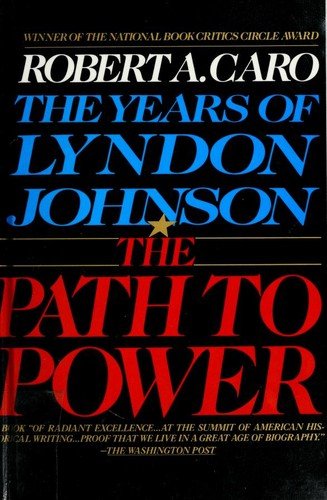
The Path to Power · Robert A. Caro
Buy on Amazon.in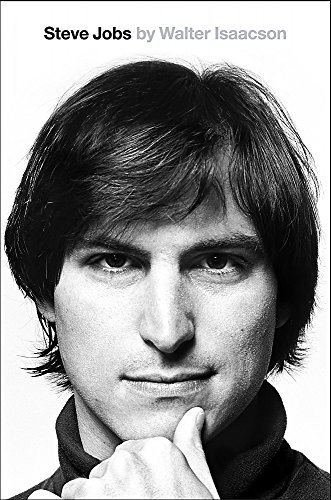
Steve Jobs · Walter Isaacson
Buy on Amazon.in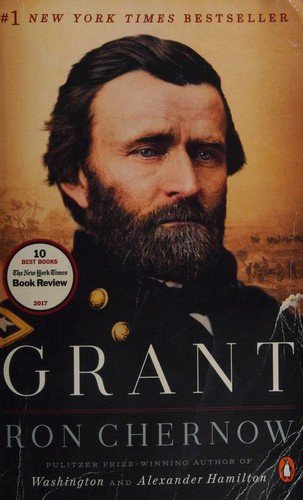
Grant · Ron Chernow
Buy on Amazon.in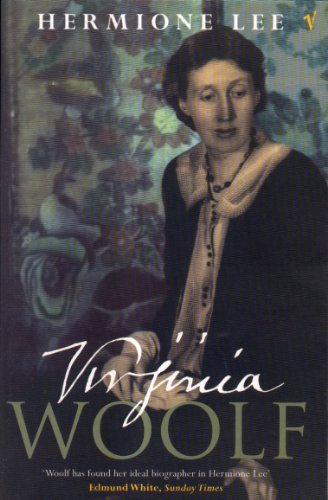
Virginia Woolf · Hermione Lee
Buy on Amazon.in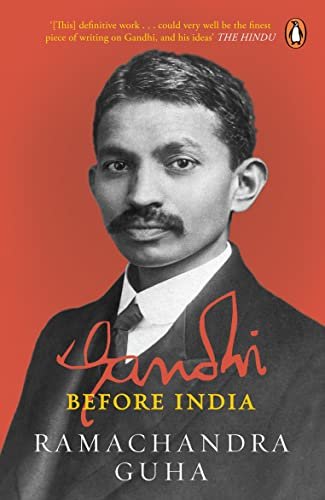
Gandhi Before India · Ramachandra Guha
Buy on Amazon.in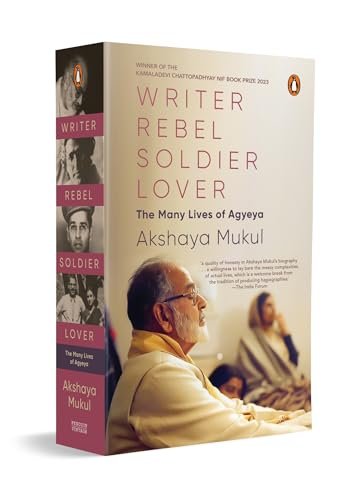
Writer, Rebel, Soldier, Lover: The Many Lives of Agyeya · Akshaya Mukul
Buy on Amazon.in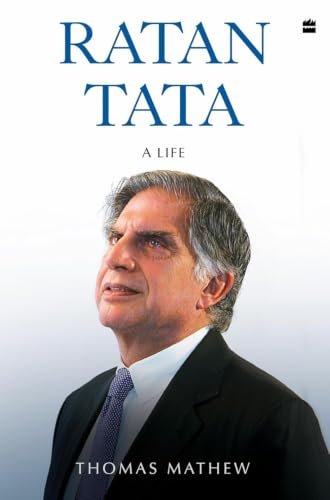
Ratan Tata: A Life · Thomas Mathew
Buy on Amazon.in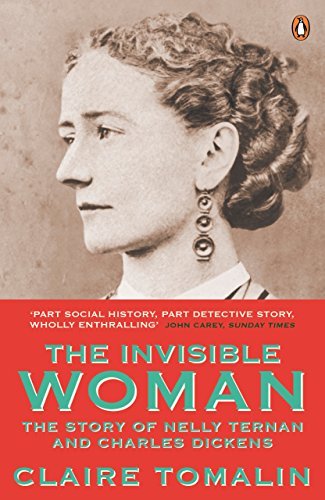
The Invisible Woman: The Story of Nelly Ternan and Charles Dickens · Claire Tomalin
Buy on Amazon.inFive rules a family can borrow
The methods of great biographers come down to five rules, and every one of them works on a parent’s life.
- Papers first. Before the first interview, gather what exists: letters, the old passport, the ration card, the shop ledger, photographs with something written on the back. They give you dates, and they give you questions.
- Ask more than one person. Your father’s version, your aunt’s version and his old colleague’s version will differ. The differences are what the book is made of.
- Go back to the place. Take your mother to the street she grew up on, or look at it together on a screen. She may remember things she would not recall in your living room.
- Leave the silence. After an answer, wait. What comes after the pause is often the real answer.
- Give it time. Great biographers take years. A family book takes months. An afternoon won’t do it. Space the conversations out.
My own process draws on the same sources. On an authorised biography, that means 30 to 60 hours of interviews with the subject, plus family, partners and colleagues as needed. Then research in archives, letters, company records, court papers and old newspapers.
If you are doing it yourself, start with how to write your parents’ life story, which walks through it in twelve steps.
Questions people ask
How long does it take to research a biography?
Years, for a major biography. Ron Chernow spent six years on Grant, and Akshaya Mukul about five on his life of Agyeya. A family book is much shorter, usually a few months, because the subject is alive to ask and the archive is mostly in the house.
What does “turn every page” mean?
It is Robert Caro’s rule, from an editor early in his career: never assume a document is unimportant, and read all of it.
How many interviews does a biography need?
As many as the life needs. Walter Isaacson did more than 40 sessions with Steve Jobs and more than 100 with other people. For a parent’s story, a series of long conversations with them, and shorter ones with siblings and old friends, is a good start.
Should a biographer believe what family members say?
Listen to everything and check what you can. Hermione Lee calls witnesses always unreliable, and Caro found that some of the best-known stories about Lyndon Johnson’s youth had never happened. Memory is evidence of how people feel, not always of what happened.
Leave a Reply