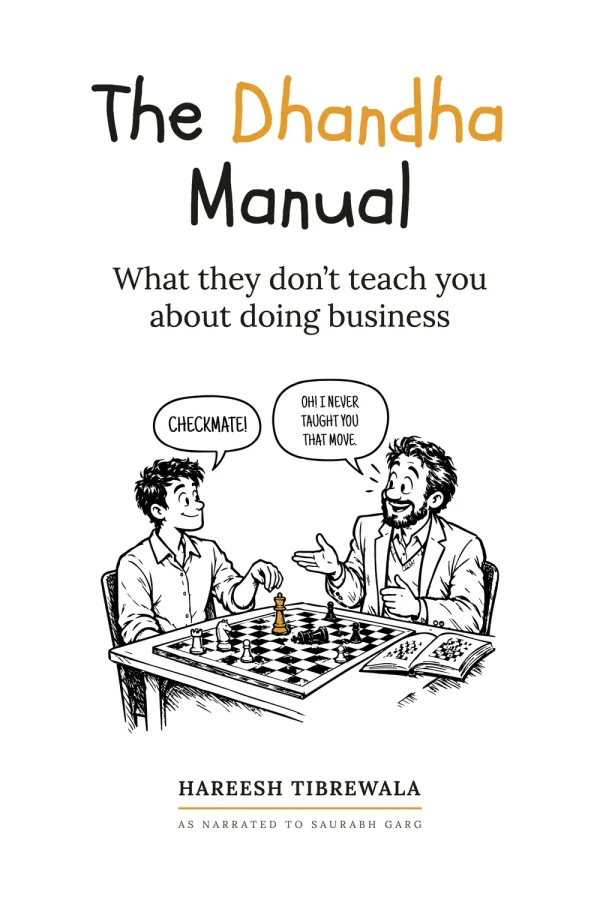
The Dhandha Manual
by Hareesh Tibrewala, as narrated to Saurabh Garg. Out December 2026.
In 1997 Hareesh Tibrewala started India’s first e-commerce website. In 2014 WPP bought into the agency he built next. This year he told me forty years of lessons. I wrote them down in his voice. Six months later, he has a book.
What is The Dhandha Manual?
The Dhandha Manual is Hareesh Tibrewala’s business book. Fifty-two chapters, one for each week of a year. Each one tells a story from forty years of building companies in India, names the principle it taught him, and ends with a toolkit. It is written for founders and for CEOs, because Hareesh was both. It is out in December 2026, and every lesson is online at thedhandhamanual.com.
Most Indian business books are written by winners about winning. Hareesh’s starts with a loss.
HomeIndia.com came before the market was ready for it. Then a small room in Govandi, where Social Wavelength began in 2009. Then WPP. Then the walk out, with the company handed to people it had grown itself. He counts that handover, not the sale, as the real test.
It is a business book, and Hareesh held that line. When the book’s website said its six parts ran “in the order he lived them”, he sent it back. Too biographical, he wrote. The line came off.
What did Hareesh have to do?
Talk. And say no when something did not sound like him.
He told me the stories. I wrote them in his voice and sent them back to him, chapter by chapter. Sixteen heads of department and eight team members sent their own accounts, so the book carries the people who were in the room, not one man’s memory of them.
He signed off every drawing the same way. Where one missed the point of its chapter, it went back to the artist with a note. The book went to publishing only when he had said yes to every page.
What does Hareesh sound like on paper?
Every chapter carries a line he would say across a table. Four of the fifty-two.
Bargain on the paint. Never on the beam that holds the roof.
Contracts are signed by companies. Loyalty is held by people.
The founder who insists on solving every problem eventually becomes the one causing them.
Stop being the highest-paid firefighter in the organisation.
If a reader hears the author, the book is done. If they hear the writer, it is not.
Who drew the book?
Parth Damani of Rollerbird Studio drew all fifty-two chapters in pen and ink. The cover is week 47: a student calls checkmate, and his teacher says he never taught him that move.
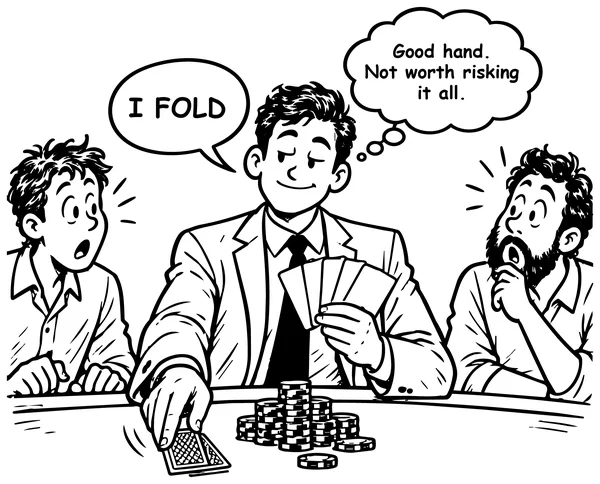

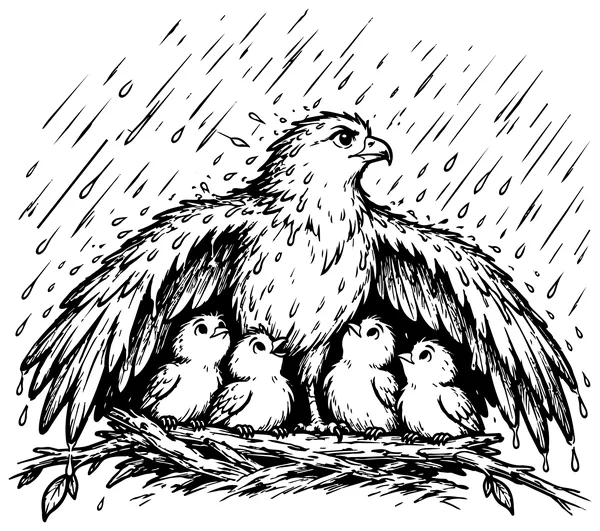
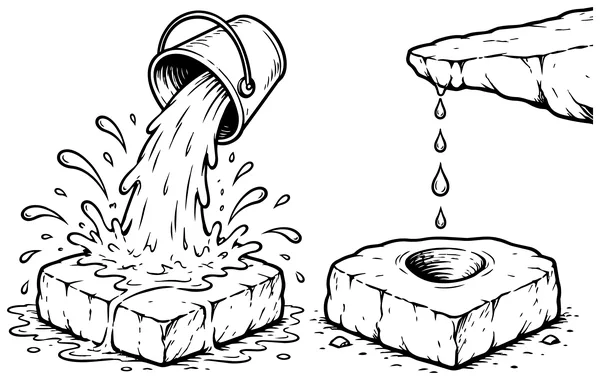

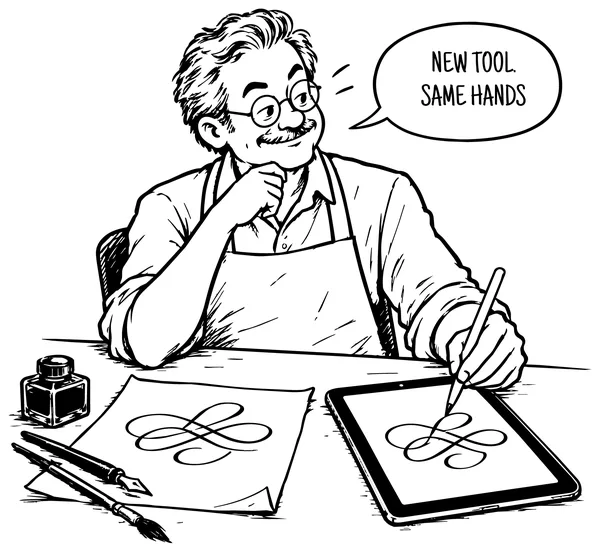
Every lesson, with its drawing, is at thedhandhamanual.com/lessons.
Who is Hareesh Tibrewala?
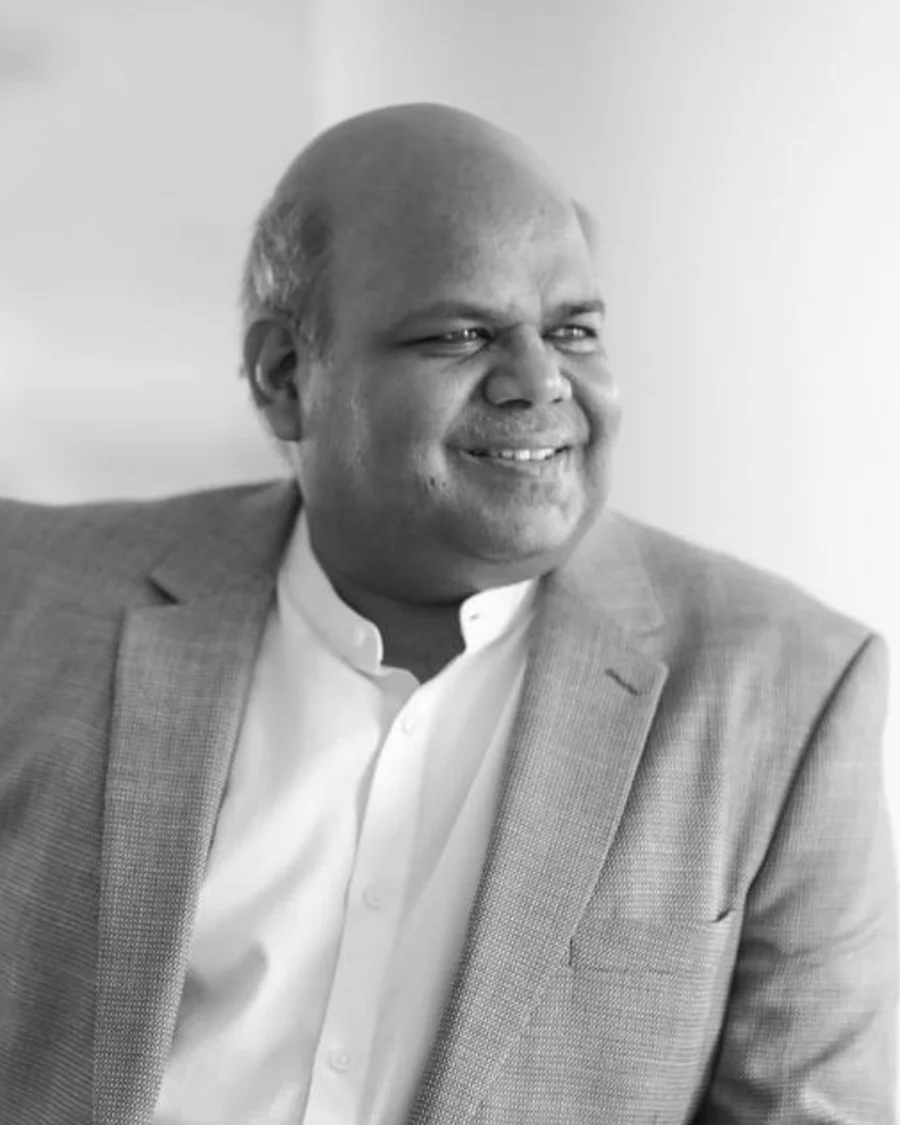
Hareesh was born in Mukundgarh, Rajasthan, and grew up in Mumbai. He studied engineering at VJTI, then took a master’s in electrical engineering at the University of Southern California.
In 1997 he and Sanjay Mehta founded HomeIndia.com, India’s first e-commerce website. The Economic Times named it India’s most useful website. The market was not ready for it, and they sold it.
In 2009 the two started again with Social Wavelength, one of India’s first social media agencies. WPP took a controlling stake in 2014 and it became Mirum India. Hareesh ran it as Joint CEO and was named Digital Marketeer of the Year by the World Brand Congress in 2018. He stepped down at the end of 2023 and left the board in June 2024.
Today he is co-founder of Manabu Labs, which works on artificial intelligence, and of Meru Life, the company behind Meru Activs. He is a Lead Partner at Social Venture Partners India and a mentor with Stanford Seed. The Dhandha Manual is his second book. The first, If I Had To Do It Again, he wrote with Sanjay Mehta in 2018.
His website: thedhandhamanual.com. Also Manabu Labs, LinkedIn and X.
How long did the book take?
About six months of writing, from May to October 2026. It is out in December.
- May 2026The shape is agreed.
- JuneAbout 10% of the book in draft.
- SummerSixteen heads of department and eight team members send written accounts for the book. About 25 photographs are shortlisted.
- 27 SeptemberA full draft.
- 25 OctoberThe final manuscript. 52 chapters, one for each week of the year.
- 28 OctoberEdits done. The book is sent for publishing.
- December 2026Out.
Could your story be a book like this?
If you built a company, sold it, handed it on, or ran it as CEO, you already have the material.
Right now it lives in the version you tell at dinners. It is shorter every time, and the people who were in the room are harder to reach every year. You talk. I write. The book sounds like you, and it carries your name. Mine goes on it only if you want it there, the way Hareesh did.
Read how I write founder books, or start with the call.
How does Saurabh Garg write a book like this?
I am Saurabh Garg, a ghostwriter and biographer. Hareesh’s book went through the same seven steps as every book I write.
- 1/
A free first call
About an hour, about the book. Whose story it is, who reads it first, and whether there is a date behind it.
- 2/
An NDA
Signed before you send me a single photograph. Yours or mine, I sign either.
- 3/
A page in your voice
You record five minutes. Inside a week I send back one page written as you. You read it and you know.
- 4/
The interviews
30 to 60 hours for a full book. Two hours a week in one fixed slot, on video or in person. Then the people who were in the room.
- 5/
A chapter plan
What the book is about, chapter by chapter. You approve it before I write a line of prose. A wrong plan costs months. A wrong sentence costs minutes.
- 6/
The drafts
In phases, with three revision rounds: the plan, the full first draft and the final read. Every draft goes back to you with one question. Does this sound like you?
- 7/
The final manuscript
With the recordings, the transcripts and the copyright. All of it yours. Six months from signing for a full book.
The full method is on the process page: the six months week by week, how the voice is caught, what stays private, and what can go wrong.
Tell me whose story it is.
And who it is for. The first call is free and takes about an hour. I reply within 48 hours, myself.
Common questions
What does “as narrated to” mean on a book cover?
The author told the story and the writer wrote the book from it. Hareesh is the author. The stories, the lessons and the opinions are his. He told them to me, and I wrote them down in his voice. The other choices are a line in the acknowledgements, or no credit at all. The author picks.
What has Hareesh Tibrewala built?
He co-founded HomeIndia.com, India’s first e-commerce website, in 1997 and Social Wavelength in 2009. WPP took a controlling stake in 2014 and the agency became Mirum India. He stepped down as CEO at the end of 2023. Today he co-founds Manabu Labs and Meru Life.
Who is The Dhandha Manual for?
Founders and CEOs. Hareesh was both at Mirum: the first years were a founder building a company, the last years a CEO inside a global group. The lessons come from both chairs.
When is The Dhandha Manual out, and where can I get it?
December 2026. There is a pre-order list at thedhandhamanual.com.
Can I read any of it now?
Yes. The principle and the toolkit of all 52 lessons are on thedhandhamanual.com/lessons. The stories are in the book.
How long did the book take?
About six months of writing. The shape was agreed in May 2026, a full draft came on 27 September and the final manuscript on 25 October. Then edits, and the book was sent for publishing. It is out in December.
Who else is in the book?
Sixteen heads of department and eight team members sent written accounts. About 25 photographs were shortlisted. A founder book reads truer when the people who were in the room have their say.
Does the author have to write anything?
No. The author talks and I write. 30 to 60 hours of interviews for a full book, two hours a week in one fixed slot. Every draft goes back to the author with one question: does this sound like you?
Will my name be on my book, or yours?
Yours. The copyright is assigned to you on the final payment. The credit is your call: your name alone, a line in the acknowledgements, or “as narrated to Saurabh Garg” on the cover, as Hareesh chose.
What does a founder book like this cost?
A full book starts at US$12,500 and typically goes up to US$25,000, paid in four parts against four deliverables. Printing sits outside the fee. The breakdown, in eight currencies, is on what it costs.
Do you only write business books?
No. Founder stories, authorised biographies, memoirs and family books. How I write founder books is on the founder story page.