A parent’s memoir in Gujarati, Tamil or Bengali reaches an English page in five steps. Record in the language the memory lives in, keep every original, transcribe before you translate, translate with an agreed word list, then check the English with someone who knows both languages. A family can do each step.
As an Amazon Associate I earn from qualifying purchases. The books on this page were chosen first; the links were added afterwards.
I should say where I stand first. I interview in English, Hindi and Punjabi, and I write in English. In any other language, an interpreter or a family member has to sit in the room. So this is a guide for doing it yourself, and most of it comes from people who have done it, with their names on it.
In the 2021 census of England and Wales alone, 188,956 people gave Gujarati as their main language. Some of their grandchildren can follow a story at the table and cannot read a letter.
Who should ask the questions?
You should ask the questions, even if your Gujarati or Tamil has rusted, because a rusty question in your mother’s language is still a question in her language.
On my page about interviewing a parent from abroad I wrote: “Ask in Tamil, in Gujarati, in whatever the kitchen ran on. If yours has rusted, ask anyway.”
If you cannot follow her answers at all, you have three choices.
| Who sits beside you | What they are good for | What to watch |
|---|---|---|
| A relative who speaks it | Knows the people and the places. Costs nothing | May soften or change an answer, on purpose or not (Squires, 2009) |
| A bilingual friend from the same town | Knows the dialect, has no stake in the family | Your mother may hold back in front of an outsider |
| A trained interpreter | Neutral and practised | Costs money, and will not know that “Ba’s brother” means the one in Nairobi |
The researcher Allison Squires, reviewing interview studies that cross languages, advises a professional translator first and a bilingual native speaker from the same country second. Those are research interviews. In a family book, the relative may be the person your mother is easiest with. If so, use the relative, and protect yourself with the recording.
How do you run an interview through someone else?
Run it as a three-way conversation with the recorder on, and treat the live interpreting as a rough guide. The real record is your father’s own voice.
I found no interpreter guidance on the pages I read from the Oral History Association or the Oral History Society, so these steps come from research methods and from health-care guidance, where interpreting is routine.
- Meet the interpreter first. Say what the book is, agree who leads, and agree to interpret in turns (eCALD, New Zealand health guidance).
- Agree a word list. Write down the kin terms, place names and family nicknames, and how each will be handled. Keep adding to it (Squires, 2009).
- Tell your father the rule. Everything gets interpreted, with no side conversations. Say it kindly, once.
- Look at your father, not the interpreter. Talk to him directly, in short sentences, and pause (eCALD).
- Record everything. That means his words and the live interpreting. Researchers Kalocsányiová and Shatnawi (2020) transcribe and retranslate the lot, then compare, because that is where the losses and gains show up.
- Talk about the words afterwards. Ask the interpreter which ones were hard. Put them on the list.
For the recording itself, a phone and a quiet room are enough. I set that out in how to record your parents’ life story on a phone.
Free printable: 100 questions to ask your parents
Ten sessions, ten questions each, in the order that gets a parent talking. Print it, take it home, tick them off as you go. Leave your email and download it straight away.
Which tool can transcribe Gujarati, Tamil and Bengali?
The best published test I found puts Sarvam Audio first for all three languages, with an error rate of about one word in eight for Gujarati, one in seven for Tamil and one in sixteen for Bengali.
That test is Voice of India, published in April 2026 by authors from IIT Madras and Josh Talks. It used unscripted phone conversations, which is much closer to your father than a studio recording. Josh Talks co-created it and the test data is not open, so read it as one good test and not the last word.
| System | Gujarati error | Tamil error | Bengali error |
|---|---|---|---|
| Sarvam Audio | 12.8% | 14.2% | 6.1% |
| Gemini 3 Pro | 15.8% | 15.7% | 8.5% |
| Amazon Transcribe | 17.7% | 19.3% | 9.1% |
| ElevenLabs Scribe v2 | 21.2% | 20.4% | 10.0% |
Word error rates from Voice of India, April 2026, with spelling variants forgiven. Lower is better. These are four of the 14 systems tested. Sarvam’s older Saarika 2.5 came second on all three. Whisper and Google’s speech service were not in the test.
Three practical notes, all checked on 2 November 2026:
- Sarvam is built for developers, so you may need a friend who can run it. Its pricing page shows ₹0.49 a minute for batch files under the name Saaras, and its Gujarati page shows ₹1.25, so ask which model the test used and what it costs before you budget. Your parent’s audio goes to its servers.
- MacWhisper runs OpenAI’s Whisper on your own Mac and costs €64 once. With a local model, nothing leaves the machine. Whisper’s language list has all three. In OpenAI’s own 2022 paper, the large-v2 model scored 17.5% on Tamil and over 100% on Bengali and Gujarati, which means more errors than words. Newer models may differ, so try a short clip before you commit.
- Alfaaz is a different kind of product: it interviews a parent over WhatsApp voice notes, in Gujarati, Tamil, Bengali and other languages, from US$61 for four months. Its page does not say how it handles English for a child who cannot read the original, so ask.
People who mix languages are the hard case. Bengali mixed with English measured a 28.27% error rate in one 2022 study (Chadha and others). Sarvam now claims mid-sentence handling, with no number, and I read no study of a Tamil or Gujarati parent switching into English. So expect to correct the machine’s draft. As I wrote in my twelve-step guide, somebody with headphones reads it against the tape. Budget two to three hours for each hour of tape you decide to use. That is my working number, and it has no study behind it. Transcribe in the language spoken. Do not translate yet.
How do you translate a parent’s memoir from Gujarati, Tamil or Bengali?
Translate only the passages you have chosen, keep the words that have no English twin, and decide before you start who checks what.
Three books, one in each of these languages, show the choices.
Gujarati: two checkers for two jobs. Gandhi wrote his autobiography in Gujarati and Mahadev Desai put it into English. Gandhi revised it for meaning and Mirabehn revised it for language, as the 1927 preface records. A family can copy that today: your parent or an aunt checks the facts, a good English reader checks the sentences.
Desai also wrote “volatile” for one Gujarati word, tej. Challenged on it, Gandhi said they had weighed “volatile”, “violent” and “fantastical”: “Mahadev had chosen volatile and I passed it.” (Both are in Tridip Suhrud’s critical edition, which reprints Desai’s English and adds notes on the Gujarati.) Keep a page of the words you argued over.
Tamil: kin words stay. Lakshmi Holmström’s English Karukku, from Bama’s Tamil, keeps chittappa, paatti and periamma. The scholar P. Sophia Morais explains why, in a 2015 paper: “uncle” cannot say “younger brother of the father”. Holmström completes Bama’s unfinished spoken sentences in the English, a choice Morais questions and another paper reads differently.
Holmström had an advantage you have too: she could ask. A six-page letter from Bama, dated 3 August 1998 and held in the SADAA archive, answers her translation questions. Make your own question list while your parent can still answer it.
Bengali: a first-time translator. Tanika Sarkar, a historian, translated major sections of Rassundari Devi’s Amar Jiban for Words to Win, and says in her remarks in the book that she had never translated before. She kept the size of the sentences and the order of the paragraphs, and used one English word for a repeated Bengali word.
She left the plain stretches in, so the vivid ones stand out, and she gave up the verse metre. Those are good rules for a daughter at a kitchen table. Amar Jiban itself is on my list of the best memoirs by Indian women.
For your transcript, Baylor University’s oral history style guide gives a plain format: the word in the original, a comma, then the meaning in quotation marks. That keeps your parent’s word on the page beside yours. For letters and papers, start with what to do with old family letters.
From the desk
On my page about voice I wrote: “Ask a man about his mother in English and you get facts. Ask in Punjabi and you get her.” My rules for carrying that over are on the same page. Words with no English twin stay in. The rhythm of the first language stays. People change language for the scolding, the joke and the thing they could not say, and that line stays in the language it came out in.
I also put it more bluntly on my page about ethical wills: “A translated father sounds like nobody’s father.”
I wrote those about Hindi and Punjabi, the languages I work in. Try the rules on your own parent and see whether they hold.
What does a translator cost, and where do you find one?
The two published rates I found for commercial translation in India are ₹1 and ₹1.25 a word, and I found no published rate for literary work.
Lingo Solution, a New Delhi agency, lists ₹1 a word for Gujarati and for Tamil on its IndiaMART page, undated, and does not list Bengali. The Press Information Bureau’s Chandigarh empanelment guidelines, in a file dated July 2024, pay ₹1.25 a word, for Hindi and English. At those rates, 25,000 words, the length of the gift book, would come to between Rs 25,000 and Rs 31,250. That is my arithmetic. Someone who can carry a voice may ask for more.
Time is the other cost. Squires reports that a translator may take one to two hours per transcribed page.
Two places to look:
- The National Register of Translators, run by the National Translation Mission. It is searchable by state and language, and shows experience and mother tongue.
- The Indian Translators Association. Its member list shows language pairs, and includes Gujarati, Tamil and Bengali translators.
How do you check a translation you cannot read?
Ask a bilingual reader who did not do the translating to compare it with the tape, then have the chapters read to your parent before they are final.
On the voice page I wrote that someone should read a mother the English chapters. “She will hear a wrong line before she can say why.” If she does not follow English, that reading has to pass through someone who does, so it catches less, and the bilingual reader matters more.
You may hear about back-translation, where a second person turns the English into Gujarati so you can compare. Squires says it does not necessarily make a translation more trustworthy, and it adds cost and time. She prefers an independent reviewer who knows both languages. For a family, that can be a bilingual friend from outside the family.
The books in this post
Each of these shows a translator’s choices you can copy.
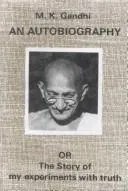
An Autobiography or The Story of My Experiments with Truth · M. K. Gandhi
Buy on Amazon.in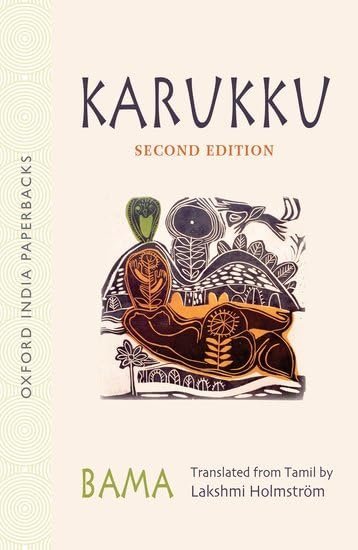
Karukku · Bama
Buy on Amazon.in
Words to Win: The Making of a Modern Autobiography · Tanika Sarkar
Buy on Amazon.inQuestions people ask
These are the questions a family asks when the parent’s best language is not the child’s.
Can I interview my mother if I barely speak her language?
Yes. Ask in what you have, and bring a relative for the rest. Record it all, so that a translator can later hear what she said and not only what got interpreted in the room.
Does any app understand Gujarati?
Yes, several now do. Sarvam Audio, Gemini 3 Pro and Amazon Transcribe were all tested on Gujarati in a study published in April 2026, with Sarvam’s error rate lowest at 12.8%. Google’s Recorder app, on Pixel phones, lists Tamil and Bengali (Bangladesh) for re-transcribing, and does not list Gujarati.
Can software read my grandfather’s handwritten Gujarati letters?
Treat it as unproven. Google Cloud Vision marks Bengali handwriting as experimental and does not list Gujarati or Tamil for handwriting. Sarvam added Indian handwriting to its vision product in September 2026 and gives no handwriting accuracy figure. Reading the letters aloud onto a recording, with someone who knows the script, is still the safer route.
Should the book be in English or in my parent’s language?
Decide at the start, because it changes how the English gets written. If your mother reads Gujarati best, plan a Gujarati edition from day one, and treat it as its own job with its own translator. On my books, a Gujarati edition is a separate commission with a separate translator.
Will you write my father’s book if he speaks only Tamil?
I write in English, and a Tamil interview needs an interpreter beside me, so an English book is possible that way. If the book has to be written in Tamil, I am the wrong writer.
The next step is smaller than a book. Pick one story, record it this week, and follow the twelve steps from there.
Leave a Reply